
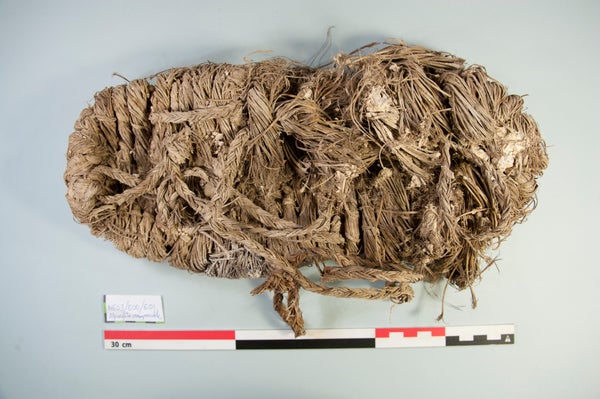
It turns out the bearded vulture—also called the quebrantahuesos, or bonebreaker—isn’t just a carrion scavenger. It’s also a keen collector of human ephemera. This habit has given researchers in southern Spain a unique boon: “time capsules” of human activity that stretch back more than 600 years in the vultures’ remote cliffside nesting caves. The raptors often reuse sites for generations.
Sifting through centuries’ worth of eggshells, sticks and broken bones, scientists have found a wealth of remarkably preserved historical artifacts—among them a crossbow bolt, part of a slingshot and a piece of leather with red decorations that archaeologists say could be a “very peculiar mask.” The vultures seem to be particularly fond of footwear; so far in excavating the upper layers of 12 nesting sites, the researchers have found 25 shoes made from woven esparto grass.
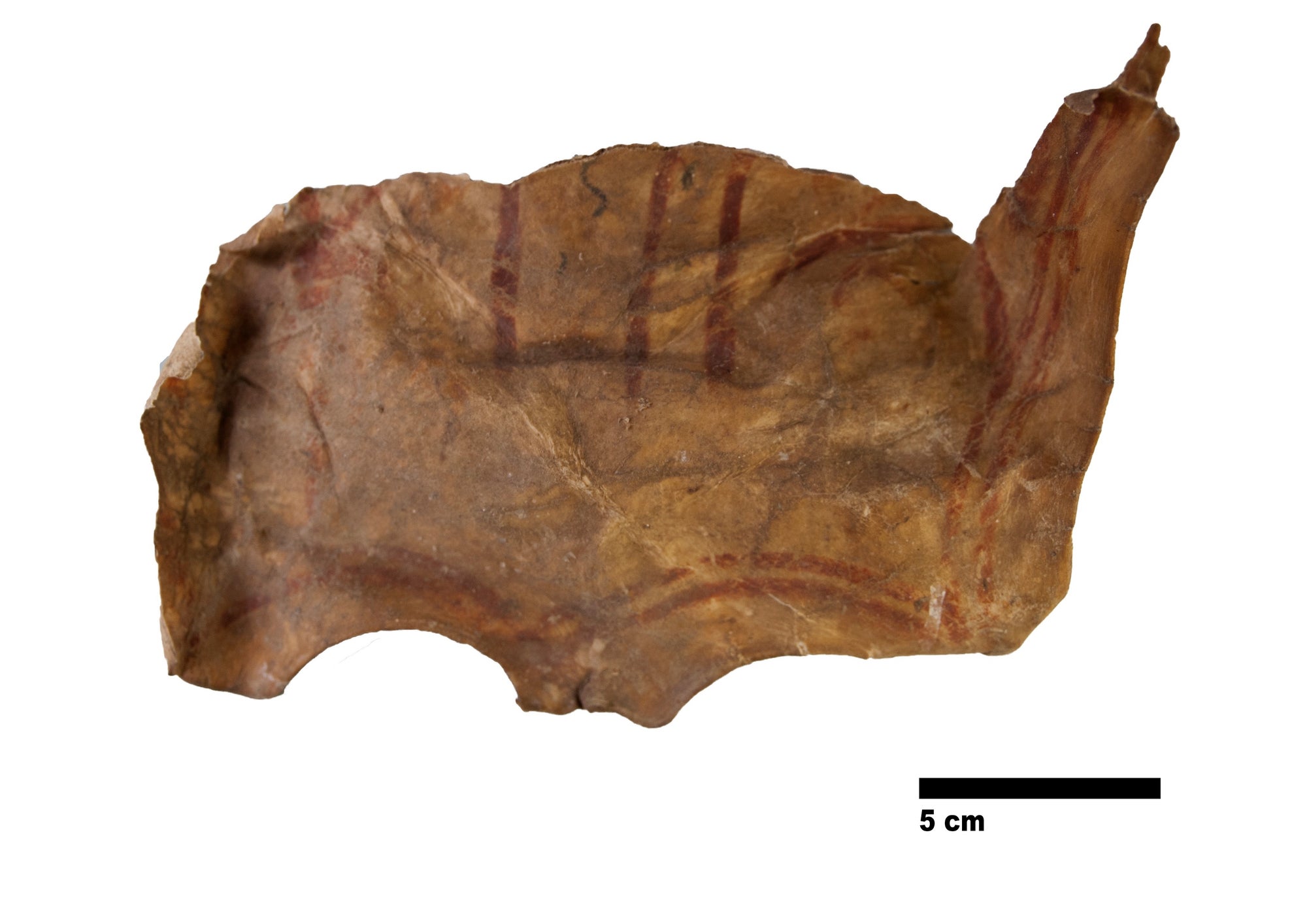
A sheep leather fragment that archaeologists say might be a “very peculiar mask” was found in an ancient vulture nesting site. It is more than 625 years old.
Lucia Agudo Perez
On supporting science journalism
If you're enjoying this article, consider supporting our award-winning journalism by subscribing. By purchasing a subscription you are helping to ensure the future of impactful stories about the discoveries and ideas shaping our world today.
With low humidity and protection from the elements, these cliffside caves create the perfect setting for preserving traces of human history and past environmental conditions. “These are the most inaccessible places you can imagine,” says Sergio Couto, a biologist at the University of Granada and co-author of a paper on the discoveries published recently in Ecology. “It’s impossible to enter if you cannot fly.” (Or, in the researchers’ case, rappel down from the cliffs.)
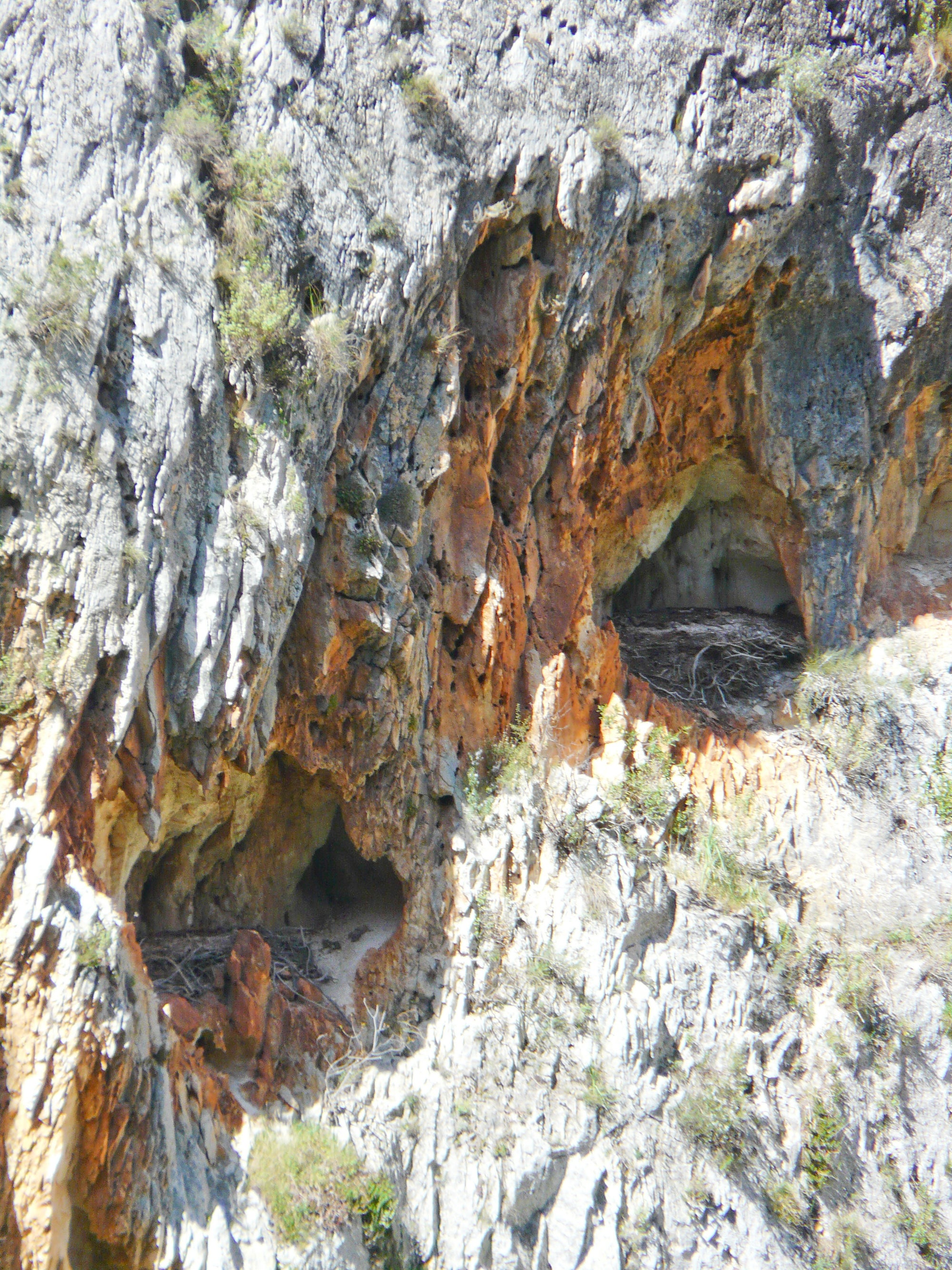
Two cliffside bearded vulture nesting sites.
Sergio Couto
These finds are just the beginning, says study co-author Ana Marín-Arroyo, a prehistory professor at the University of Cantabria. “If the upper layers are from the 13th century, the lower layers are going to be older. How old?”
Perhaps quite old indeed. Bearded vultures have frequented the Iberian Peninsula for at least 29,000 years—fossilized feces containing acid-digested bones place the birds in what is now Portugal, where they would have lived alongside human hunter-gatherers. University of Barcelona archaeologist Montserrat Sanz, who helped to discover the Portuguese fossils, says the Spanish team’s finds are “quite surprising” and will most likely spark a wave of research follow-ups.
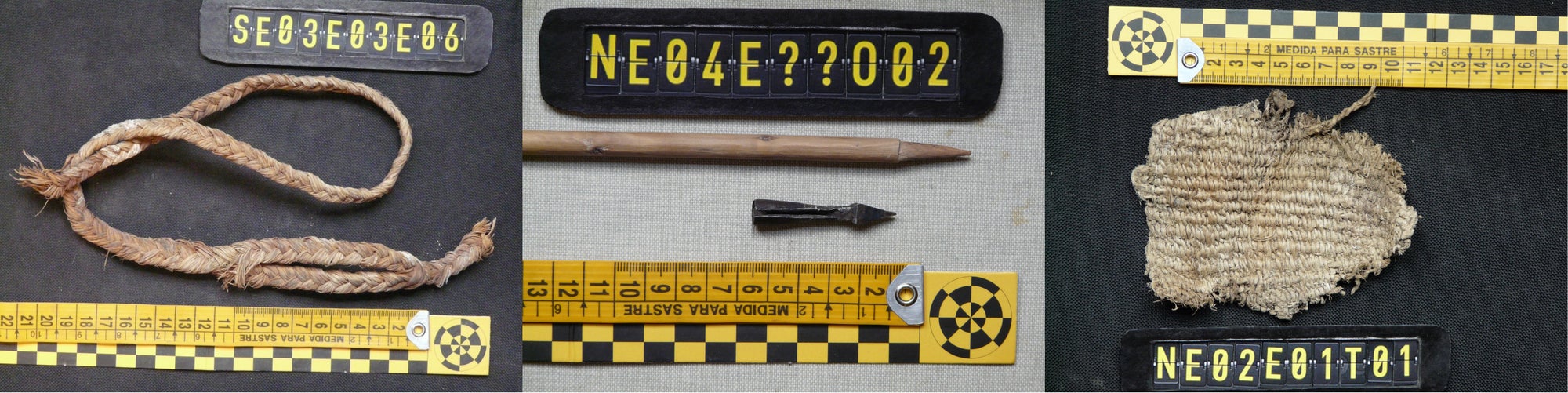
A portion of a woven-grass slingshot, a crossbow bolt and lance and a piece of a basket, all found in layers of vulture nests.
Sergio Couto
There are plenty of potential time capsules to check. The vultures’ range stretches from Tibet to Tanzania, and the birds are unusually prolific nest builders; whereas other vulture species may throw together a nest a couple of weeks before laying their eggs, bearded vultures spend months crafting two to three nests every year before settling on one to raise chicks.
It takes a lot of material to construct these nests, which can stretch up to six feet wide. And just as the vultures use wool from mountain-dwelling sheep as insulation, they’ll take advantage of materials from their human neighbors, too. “They remind us how easily we forget that we are part of the ecosystem,” Sanz says.
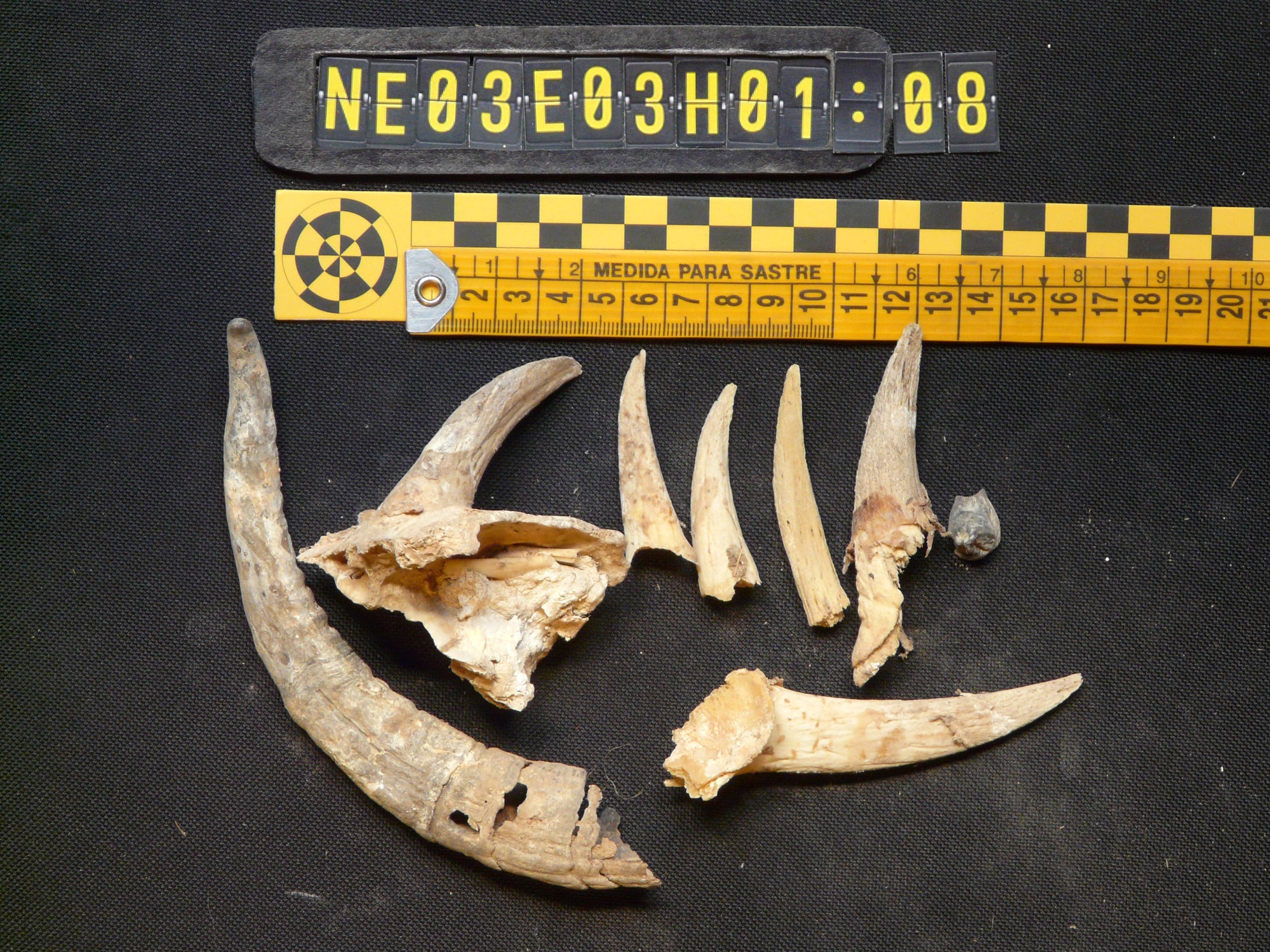
Goat horns found in one of the vulture nests.
Sergio Couto
Some stories, it seems, will repeat themselves wherever vultures and humans live side by side. The same month as the paper’s publication, a store in Catalonia had an unexpected shopper: a young vulture yanked several espadrille shoes off the racks.
A version of this article entitled “Vulture Culture” was adapted for inclusion in the December 2025 issue of Scientific American.