
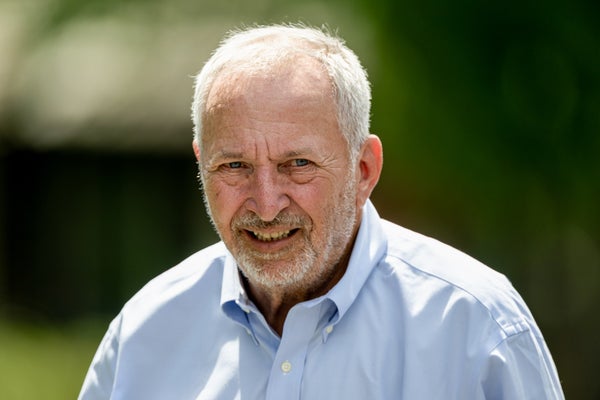
Former Harvard University president and influential economist Larry Summers will resign from his research and teaching posts at the end of the current academic year.
The move comes after Harvard launched an investigation into Summers and several other scholars over their ties to disgraced financier and convicted sex offender Jeffrey Epstein last November.
Summers will also step back from his position as co-director of the Mossavar-Rahmani Center for Business and Government at the Harvard Kennedy School.
On supporting science journalism
If you're enjoying this article, consider supporting our award-winning journalism by subscribing. By purchasing a subscription you are helping to ensure the future of impactful stories about the discoveries and ideas shaping our world today.
Harvard spokesperson Jason Newton wrote in a statement to Scientific American that “in connection with the ongoing review by the University of documents related to Jeffrey Epstein that were recently released by the government, Harvard Kennedy School Dean Jeremy Weinstein has accepted Professor Lawrence H. Summers’ resignation from his leadership position as co-director of the Mossavar-Rahmani Center for Business and Government.”
“Professor Summers has announced that he will retire from his academic and faculty appointments at Harvard at the end of this academic year and will remain on leave until that time,” Newton wrote.
The depth of Summers’s relationship to Epstein was revealed through a trove of e-mails released by a congressional committee last November and in other documents that were subsequently released by the Department of Justice. In some 2018 and 2019 e-mails, Summers appeared to have sought advice from the then convicted sex offender over a relationship Summers had sought with a younger woman he described as a mentee. Epstein died awaiting trial on charges of sex trafficking in 2019.
Summers previously resigned from his position on the board of OpenAI. In a statement to the Harvard Crimson following the announcement that he would step back from teaching that was also provided to Scientific American, Summers said that the decision had been “difficult” and that he looked forward “in time to engaging in research, analysis, and commentary on a range of global economic issues.”
Summers is the second high-profile academic to step back from some of their positions this week: on Tuesday Richard Axel, a Nobel laureate, announced he would resign from his position as co-director of Columbia University’s Mortimer B. Zuckerman Mind Brain Behavior Institute over his links to Epstein.
Editor’s Note (2/25/26): This is a developing story and may be updated.