
An estimated one in eight cancer cases worldwide may be caused by infections—many of which are preventable with treatment or vaccines, according to new research.
In a study published on Monday in the Lancet Oncology, researchers estimate that infections were responsible for approximately 2.3 million cancer cases, or about 12 percent of diagnoses, worldwide in 2024.
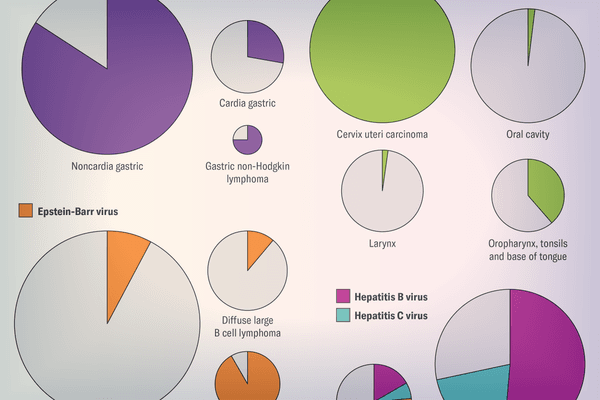
Helicobacter pylori bacteria and human papillomavirus (HPV) combined accounted for more than an estimated 1.5 million cancer cases, the analysis found. An estimated 360,000 cancer cases were linked to hepatitis B infections, and 260,000 cases were caused by the Epstein-Barr virus.
On supporting science journalism
If you're enjoying this article, consider supporting our award-winning journalism by subscribing. By purchasing a subscription you are helping to ensure the future of impactful stories about the discoveries and ideas shaping our world today.

Amanda Montañez; Source: “Global Burden of Cancer Attributable to Infections in 2024: A Worldwide Incidence Analysis,” by Harriet Rumgay et al., in Lancet Oncology, Vol. 27. Published online September 28, 2026 (data)
There is good news here: millions of cancers are preventable, says Gary Clifford, the study’s senior author and an epidemiologist at the International Agency for Research on Cancer. “These are very actionable risk factors. We can test for them. We can vaccinate against them.”
The new estimates update older research to investigate cancer and infections that was conducted in 2018. Since then researchers have discovered that the Epstein-Barr virus, which is known to cause cancers such as nasal pharyngeal cancers and some forms of lymphoma, is also linked to some stomach cancers and some rarer lymphomas, Clifford says.
There were geographic differences in the places where cancers caused by infections occurred, too. In sub-Saharan Africa, for instance, there were higher rates of such cancers, in part because of “disparities in investment,” Clifford says, such as a lack of cervical cancer screening programs compared with those that have been available in, say, the U.S. By knowing where the infection-linked cancer burden has been highest, health officials can work to prevent those infections.
The findings serve as a reminder that infectious agents cause cancer, says Anna Giuliano, founding director of the Center for Immunization and Infection Research in Cancer at the Moffitt Cancer Center. “And there’s something we can do about it,” she says.
People can be screened and treated for hepatitis C and vaccinated against hepatitis B, both of which can cause liver cancer, for instance, she notes. Antibiotics can reduce the risk of cancer in people with H. pylori infection. And the HPV vaccine, first introduced in the U.S. in 2006, can prevent six different cancers, including cervical cancer, throat cancer and anal cancer.
In the 20 years since the HPV shot was first introduced in the U.S., in fact, rates of cervical cancer have dropped in some states by more than 50 percent among women aged 20 to 31, the first group eligible to receive the vaccine as preteens. Researchers have documented similar benefits around the globe.
“There is no question that this vaccine does what it was intended to do,” Giuliano says.
Nancy Lee, an oncologist at Memorial Sloan Kettering Cancer Center, says the new findings underscore the importance of vaccination.
“HPV vaccination is critical to preventing infection and reducing the burden of HPV-related cancers,” she says, noting that, in the U.S., HPV-related throat cancer is a “growing” concern.
Ultimately, the takeaway is that “serious mortal diseases can be prevented with a simple population-based equality-driven jab in the arm,” Clifford says. “It’s really very simple and straightforward.”