
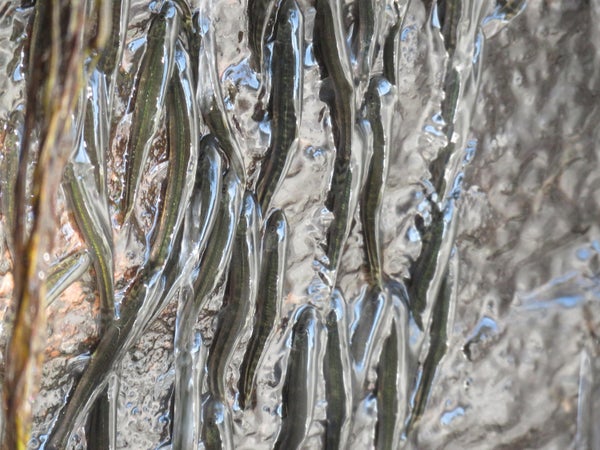
The world cheered when Alex Honnold free-climbed a 101-story skyscraper in Taipei. Gather now, fickle public, to applaud the new free-climbing champion: the shellear, a fish that is about the size of a ziti noodle—and that can scale a 50-foot waterfall.
During major floods, thousands of the tiny fish convene at Luvilombo Falls in the upper Congo River Basin to undertake a peculiar vertical migration, described for the first time in Scientific Reports.
At sunset they sidle up to the splash zone—the damp areas on either side of the waterfall’s main flow—and press their fins flat against the sheer rock face. The fins are covered in what study lead author Kiwele Mutambala Pacifique, a Ph.D. student at the University of Lubumbashi in the Democratic Republic of the Congo, calls petit crochet (French for “little hooks”). These microscopic single-celled structures give the shellear its grip, he explains.
On supporting science journalism
If you're enjoying this article, consider supporting our award-winning journalism by subscribing. By purchasing a subscription you are helping to ensure the future of impactful stories about the discoveries and ideas shaping our world today.

Kiwele Mutambala Pacifique
Then, with a wiggle of the tail, “it’s as if the fish is swimming but in vertical,” he says. “It’s beyond imagination.”
How can such a little fish scale a vertical distance that is, proportionally to its size, 50 percent taller than Honnold’s skyscraper? In this case, by taking a lot of breaks. The shellear travel with bursts of upward motion that are peppered with short rests under a minute long and longer breaks of about an hour—whenever they reach a ledge where they can lay their fishy head. The entire journey takes about 10 hours, and “most of that is, in fact, resting time,” says Emmanuel Vreven, an ichthyologist at the Royal Museum for Central Africa in Belgium and a co-author of the new paper. “Some of the fish fall down during climbing and have to start over again.”
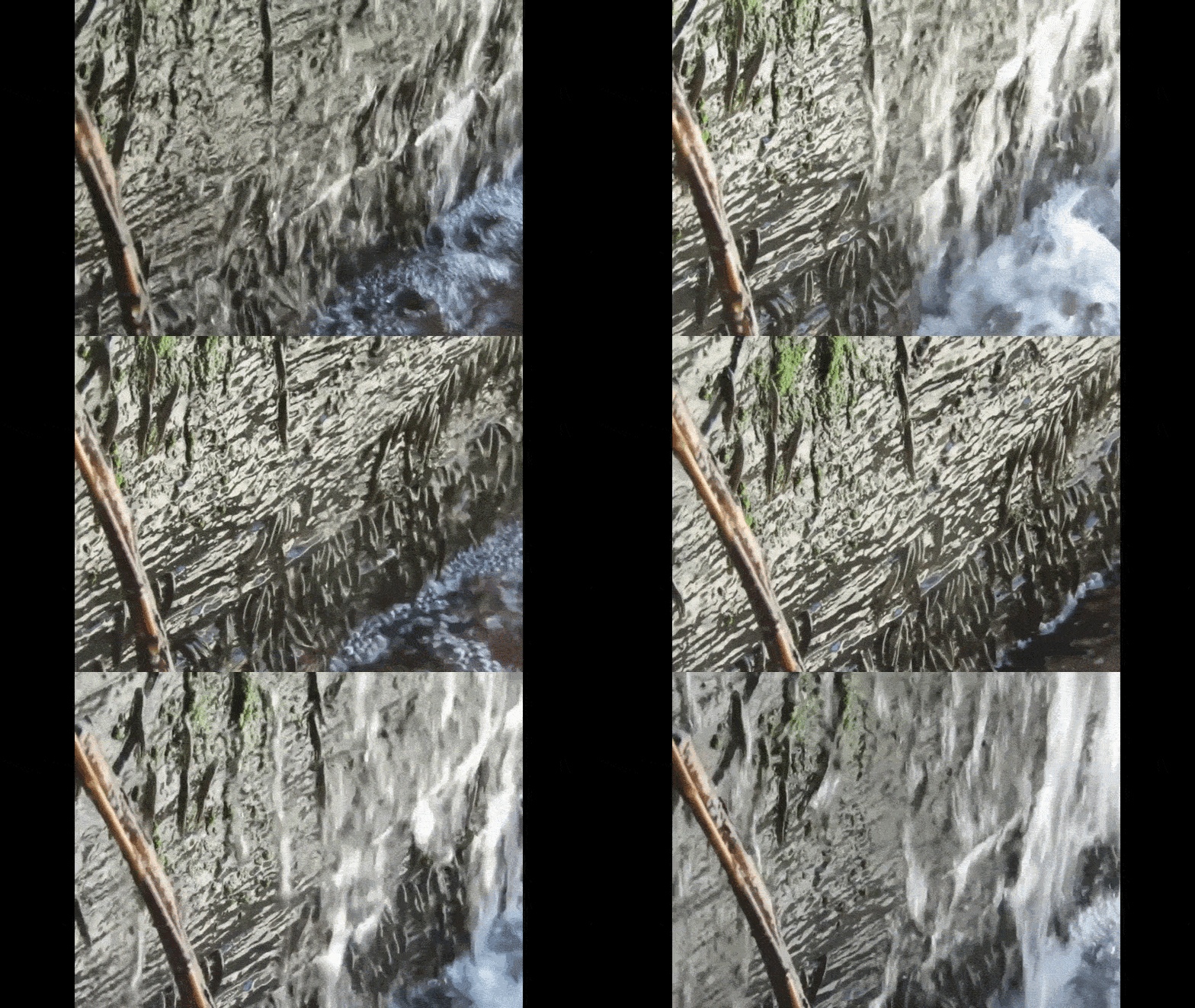
Shellear fish (Parakneria thysi) climb a waterfall in the Democratic Republic of the Congo.
P. K. Mutambala and L. N. Kalumba
Clearly, the shellear are highly motivated to climb; whether the journey helps the fish evade predators at the foot of the waterfall or pursue a mate or a meal upstream, scientists aren’t certain.
It’s “fabulous” to see a fish use “friction enhancers” like these hooks to cling and climb, says Adam Summers, a biologist at the University of Washington, who studies unusual adaptations in fish and wasn’t involved in the study. Other species, such as lumpsuckers—Summers’s longtime favorite—employ suction to stick to rocks. (In fact, an April 1913 issue of Scientific American includes an article about a South American catfish that used suction in a similar way.) But the friction trick most likely works for shellear only because of their diminutive size—indeed, the authors noticed that larger individuals get left behind at Luvilombo.
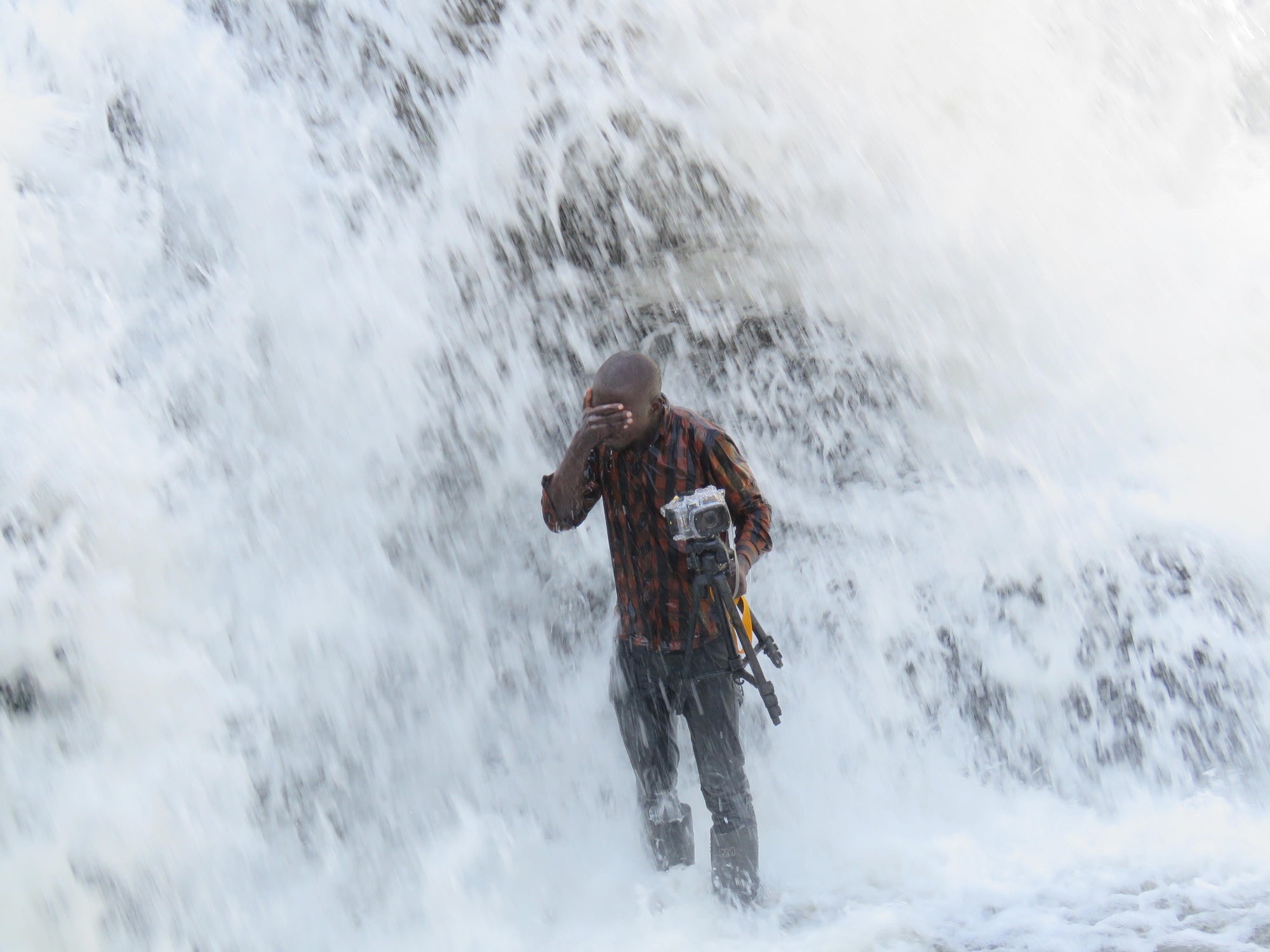
Kiwele Mutambala Pacifique demonstrating that not all heroes wear capes.
Auguste Chocha Manda
The researchers hope the shellear’s athleticism will inspire ecotourism for African fauna. Safari-goers are too often preoccupied with the “Big Five” game animals—lions, leopards, rhinoceroses, elephants and buffalo. “But there are amazing things to see in little fish,” Vreven says.