
This article is from Proof Positive, our friendly newsletter that explores the joys and peculiarities of math. Sign up today for a weekly math essay and puzzle in your email inbox.
In March 2026 Google shared a startling finding with the world: quantum computers could be capable of cracking common encryption methods by the end of the decade. Personal data, state secrets, bank accounts: everything would be vulnerable. According to the tech company, the end of digital secrets is imminent, unless governments and digital stewards act quickly and adapt more secure online systems in time. This is a very complex and expensive undertaking, however.
On supporting science journalism
If you're enjoying this article, consider supporting our award-winning journalism by subscribing. By purchasing a subscription you are helping to ensure the future of impactful stories about the discoveries and ideas shaping our world today.
In the scientific community, it wasn’t just the result that garnered attention but also the way it was presented: for the first time in scientific history, Google employed a “zero-knowledge proof,” revealing absolutely no information about the scientific methods used to arrive at the result. By doing so, Google demonstrated to the scientific community that it possessed a powerful quantum algorithm for cracking encryption—without disclosing what, exactly, that algorithm was. The researchers at Google argued that the risk of the algorithm being misused or rapidly developed further if it was made public was simply too great.
This approach contradicts all the principles of the scientific community. Because the solution method is not publicly accessible, the knowledge gained cannot be used by others. Some experts subsequently questioned whether this would remain an isolated case—or whether zero-knowledge proofs would become the norm in a research world where companies that have secrets to keep play an increasingly important role.
In Google’s case, however, this approach did not prove successful. On the contrary, the attempt failed—the quantum algorithm remained secret for only a few days.
Evidence that Keeps Secrets
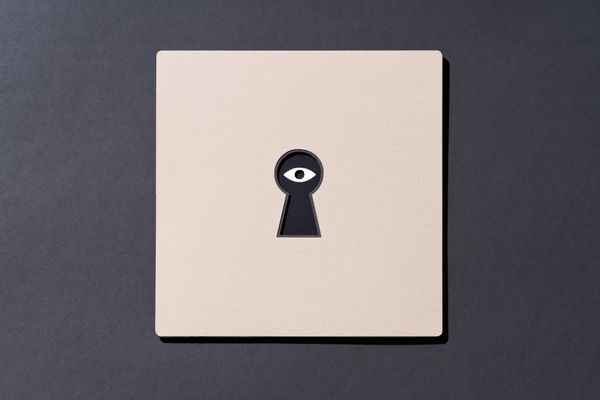
In the mid-1980s, experts fundamentally changed the world of cryptography with the invention of the zero-knowledge proof—or at least the idea of one. While various methods for encrypting data had existed for millennia, if you wanted to convince someone of something—for example, that you had developed a powerful algorithm for quantum computers, as in Google’s case—there was no way around disclosing how you reached your conclusion. Zero-knowledge proofs eliminate this necessity.
As it turns out, a zero-knowledge proof can be developed for any verifiable proof. It confirms that someone possesses the proof without actually revealing what the proof is. This works through interaction: the person who supposedly possesses a proof repeatedly exchanges information with the person they are trying to convince. With each step, their conviction that the claim is true grows. In practice, algorithms are used for this exchange.
In Google’s case, the proof was based on the claim that a specific form of elliptic curve cryptography could be broken by a quantum algorithm operating with just 1,175 logical qubits (quantum information units) and more than two million “Toffoli gates” (logical operations). Until now, experts had estimated that at least 20 times that number of qubits would be needed—a figure that current quantum computers are still far from achieving. As of July 2026, the current record is just under 100 logical qubits.
Google’s result represented a drastic step forward. But the zero-knowledge proof, which the tech company’s researchers had released in the first version of their white paper in March 2026, proved to be flawed. As a team led by computer scientist Keegan Ryan quickly realized, the zero-knowledge proof could also be used to prove false claims. One example: it proved that the encryption could be cracked even without Toffoli gates—which was obviously false because the algorithm would then be unable to perform any logical operations.
In mid-April 2026, the Google developers and their colleagues were able to correct the flawed proof and replace it with a valid zero-knowledge proof. Their original claim was thus upheld; the error had only been in the implementation of the method, not the finding itself. But the problems didn’t end there.
The secrecy surrounding Google’s work piqued the interest of experts and spurred them to openly reproduce the result. After just 63 days, cryptologist André Schrottenloher of the Inria Center at the University of Rennes in France succeeded. He even managed to surpass Google’s result with an improved quantum algorithm that is now publicly available. That same day, Google scientist Craig Gidney, a co-author of the company’s proof, responded on his personal blog: “My congratulations to André on being the first to match our circuits,” Gidney wrote. “Not only did he get it done in two months, he improved the Toffoli count a little bit!”
Meanwhile several experts, independent of Schrottenloher, had launched an initiative aimed at reproducing Google’s result. After just three days, a dedicated online community succeeded in significantly surpassing the existing result using artificial-intelligence-based agent systems. The developers were able to almost halve the number of Toffoli gates required.
In short, Google’s plan backfired. Instead of providing more security, its obfuscation tactics challenged experts, who then reproduced—and improved upon—the result.
In his blog post, Gidney noted that he sees this as a problem with zero-knowledge proofs in the publication of scientific results. “I enjoyed publishing some cheeky [zero knowledge proofs],” he wrote, “but I don’t think it’s the right strategy moving forward. The benefits are negligible, and the costs are many. We should just publish openly.”
This article originally appeared in Spektrum der Wissenschaft and was reproduced with permission. It was translated from the original German version with the assistance of artificial intelligence and reviewed by our editors.