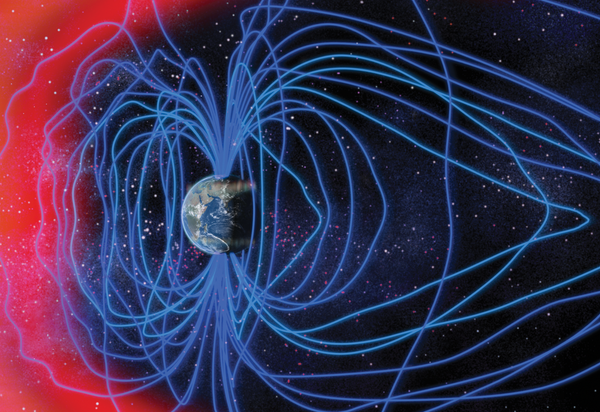
Solar Superstorms, Illustrated

An executive order calling for more preparedness and better forecasting for space weather is creating a buzz about electromagnetic storms. What are they?

Join Our Community of Science Lovers!

This article was published in Scientific American’s former blog network and reflects the views of the author, not necessarily those of Scientific American


Credit: Pat Rawlings SAIC

Last month, President Obama signed an executive order to better prepare the nation for the potentially disastrous effects of of solar flares, solar energetic particles, and geomagnetic disturbances. Per the document:

“Extreme space weather events—those that could significantly degrade critical infrastructure—could disable large portions of the electrical power grid, resulting in cascading failures that would affect key services such as water supply, healthcare, and transportation. Space weather has the potential to simultaneously affect and disrupt health and safety across entire continents. Successfully preparing for space weather events is an all-of-nation endeavor that requires partnerships across governments, emergency managers, academia, the media, the insurance industry, non-profits, and the private sector.”


On supporting science journalism

If you're enjoying this article, consider supporting our award-winning journalism by subscribing. By purchasing a subscription you are helping to ensure the future of impactful stories about the discoveries and ideas shaping our world today.


How do these electromagnetic storms reach Earth? Here are the basics, as set forth in a graphic from “Bracing the Satellite Infrastructure for a Solar Superstorm,” by Sten Odenwald and James Green in the August 2008 issue of Scientific American.

Credit: Melissa Thomas

Want to dive in further? Check your local planetarium for screenings of the full-dome video Solar Superstorms. For more on forecasting space weather, and recent glitches experienced by the primary tool for tracking it—see “U.S. Sharpens Surveillance of Crippling Solar Storms” and “Cosmic Rays May Threaten Space-Weather Satellite.”

Jen Christiansen is acting chief of design and senior graphics editor at Scientific American, where she art directs and produces illustrated explanatory diagrams and data visualizations. She is also author of the book Building Science Graphics: An Illustrated Guide to Communicating Science through Diagrams and Visualizations (CRC Press). In 1996 she began her publishing career in New York City at Scientific American. Subsequently she moved to Washington, D.C., to join the staff of National Geographic (first as an assistant art director–researcher hybrid and then as a designer), spent four years as a freelance science communicator and returned to Scientific American in 2007. Christiansen presents and writes on topics ranging from reconciling her love for art and science to her quest to learn more about the pulsar chart on the cover of Joy Division’s album Unknown Pleasures. She holds a graduate certificate in science communication from the University of California, Santa Cruz, and a B.A. in geology and studio art from Smith College. Follow Christiansen on Bluesky @jenchristiansen.com

More by Jen Christiansen

It’s Time to Stand Up for Science

If you enjoyed this article, I’d like to ask for your support. Scientific American has served as an advocate for science and industry for 180 years, and right now may be the most critical moment in that two-century history.

I’ve been a Scientific American subscriber since I was 12 years old, and it helped shape the way I look at the world. SciAm always educates and delights me, and inspires a sense of awe for our vast, beautiful universe. I hope it does that for you, too.

If you subscribe to Scientific American, you help ensure that our coverage is centered on meaningful research and discovery; that we have the resources to report on the decisions that threaten labs across the U.S.; and that we support both budding and working scientists at a time when the value of science itself too often goes unrecognized.

In return, you get essential news, captivating podcasts, brilliant infographics, can't-miss newsletters, must-watch videos, challenging games, and the science world's best writing and reporting. You can even gift someone a subscription.

There has never been a more important time for us to stand up and show why science matters. I hope you’ll support us in that mission.

Thank you,

David M. Ewalt, Editor in Chief, Scientific American

Subscribe