

Rachel Feltman: For Scientific American’s Science Quickly, I’m Rachel Feltman.
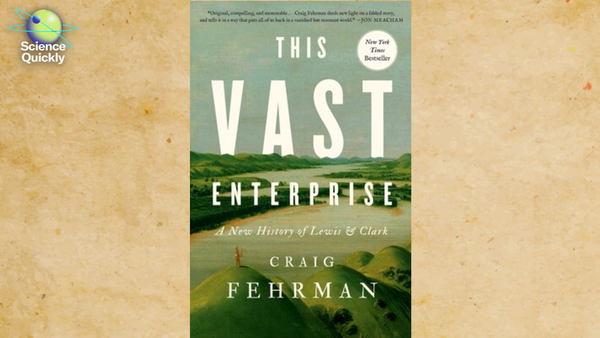
We’re capping off our week of summer reading episodes with a book about a famous chapter in U.S. history: the Lewis and Clark expedition.
Now, if tucking into a book on a topic you no doubt learned about back in elementary school sounds less than tempting, let me share just a few quick reviews of This Vast Enterprise: A New History of Lewis & Clark. The Boston Globe declared it “a ripping good read,” Publishers Weekly called it a “revelatory unveiling of the raw humanity behind the hagiography,” and the Washington Free Beacon categorized it as a “rousing adventure tale that may also qualify as the most lyrical of survival guides.”
On supporting science journalism
If you're enjoying this article, consider supporting our award-winning journalism by subscribing. By purchasing a subscription you are helping to ensure the future of impactful stories about the discoveries and ideas shaping our world today.
Now that I’ve built all this anticipation, let’s hear from the book’s author, journalist and historian Craig Fehrman. Here he is in conversation with Bri Kane, books and culture lead at Scientific American.
Bri Kane: Hello, Craig. Thank you so much for talking with me today about This Vast Enterprise. I am really excited to ask you all of my fifth grade education questions about Lewis and Clark, because that was the last time I think I thought critically about this journey.
Craig Fehrman: Well, thanks for having me, and we’ll figure out what you learned that was right and what maybe needs a little updating, but it’ll be fun either way.
Kane: [Laughs.] Yeah. I mean, the book is over 400 pages and an additional 60 pages of just notes, which I always get excited to see in a nonfiction book. So I wanted to start off with just asking you about your process in distilling so much history in still quite a few pages.
Fehrman: Well, I mean, I needed to have something new to say. I spent five years on this, so I, I wasn’t gonna write a book that would rehash the work done by other people. So it was important for me to find a new approach. And what I decided to do was that, you know, even though this is the Lewis and Clark expedition, it was about a lot more than Lewis and Clark.
And so I tried to sort of pull the spotlight out a little bit, to include other people like York and Sacagawea or John Ordway, who was a working-class soldier, like, he was the one in the cold river doing the really hard work while the captains were off doing scientific stuff or geographical stuff.
And so when I decided to change the lens, that sort of gave me a different way to read the journals. The one reason there’s so many notes in this book is because I had such fantastic sources to work with. The journals are more than a million words long; that’s longer than the Bible. That’s four Moby Dick’s. And I was able to sort of reread those journals and notice that, you know, Sacagawea, York, all these other people, they were always there in the journals. It’s just kind of up to us as historians and readers to notice them and make sure that they’re in that spotlight, too.
Kane: I mean, I have to say there are also so many maps. There is a map at almost every chapter start, and I loved how you broke them up into legs of the journey and—’cause each chapter follows a specific person, as you say, not always Lewis and Clark, there are plenty of other people on this journey—and it shows the leg that this person we’re now focusing on has traveled through this. So I wanted to ask you about the maps and how you decided to break them up in this way.
Fehrman: Well, to me not, you know—making it more of an ensemble story, it wasn’t just enough to have John Ordway do something important or Sacagawea do something important. I wanted, in this book, for people to feel like they were in the canoe. I really want it to be immersive. But I didn’t just want them to be, you know, in Lewis’s canoe. I wanted to move them around. So it was important that the writing style would kind of change chapter to chapter, and it would take on different people’s perspectives, because it, it’s not just enough to find new facts. You really want the storytelling to be more inclusive and more flexible to really make readers feel how much of a team effort this really was.
But I still wanted to tell the greatest hits, you know? I still wanted the Rocky Mountains, and I wanted the grizzly bears, and I wanted to keep people oriented for this whole A-to-Z journey. And that’s where I think the maps were really important. One thing that’s kinda interesting about the maps is that in the book, I worked really hard never to say, you know, “They crossed into what is now Montana,” because I didn’t wanna take people out of 1804. I wanted, in the book, for people to really feel like this was a time machine. This was a chance to see the world the way it felt and looked back then. But in those maps, we do have the modern states and things like that, too. So I think that orients readers a little bit, and they can kind of draw those connections, and then once they start reading, hopefully the time travel clicks in, and they feel like they’re right there in the canoe with everybody.
Kane: I couldn’t agree more. I found this book very immersive, and for a journey that so many of us learn—as I joked before—so many of us learn in elementary school and then maybe don’t spend a lot of our adult lives thinking about Lewis and Clark, there’s a lot there. I mean there’s, as you said, tons and tons of journals and tons of additional scholarship that has happened since then, and yet we still have gaps in the historical record.
You use phrases like “must have” or “surely” in the work to kind of fill in those gaps and to use our modern understanding of humans going on an extraordinary journey to understand what these people must have been feeling. I wanted to ask you about how you approach those gaps in the historical record as a historian but then also as a storyteller.
Fehrman: Well, I feel like they’re kind of the same job. I think the research, the endnotes, but also the page-turning front of the book, you know, the main story, to me, those are never in opposition. They work best together, and the more details you find, the better story you can tell. But in terms of that, kind of, that—those inferences and those attempts to sort of, like, understand it as best we can, I think a story is the best way to illustrate this. When the expedition made it to Three Forks in, in what is now Montana, Sacagawea, that was where she had been kidnapped and enslaved years before. And so Lewis and Clark knew this, and Lewis sort of paid attention to her, and in his journal, he wrote, “You know, she’s not really showing any emotion, even though she’s back to this place where something really terrible happened to her. I think as long as she has some food and some jewelry, she could be happy anywhere.”
So that’s, sort of, that’s the objective record, right? Like, that’s the journal that’s been put down by the soldier that we have. But we know it’s not true because only a couple weeks later, Sacagawea makes it back to her family, and when she sees them, she breaks down and starts sobbing. She’s crying so hard she can’t even translate. So it is true that when Lewis looked at her, he didn’t see any emotion, but it’s not true that she didn’t feel any emotion. It’s just true that he either didn’t notice it or she chose not to share it.
And so that gap between what Lewis saw and then what Sacagawea expressed a couple weeks later, to me, that’s why you have to use these kinds of words and these inferences because it would not be a more accurate book if I didn’t talk about what Sacagawea might have been feeling. It would’ve been a less accurate book because we know she was feeling something. I’m just trying to use those five years of work, interviews with Native people today, the details in the journals, all the scholarship I read, all of those sources, to understand as best we can recapture what the world felt like to her.
Kane: Yeah, I mean, one of the gaps in the historical record seems to be an entire person. I mean, before reading this book, I had never heard about York and his important role in this whole journey. I really wanted to ask you about how you approached York as a character in this book and how you understand him as a man in this historical record.
Fehrman: Well, his arc is so fascinating, and, and we actually do know more than you would think because he shows up in those journals, but he’s always showing up in those journals through Clark’s perspective, because, as far as we know, York could not read or write.
And so Clark had a very controlling and possessive attitude toward York, as many slave owners did of their enslaved people in this time period. But what’s interesting is that on this expedition, the farther they got from America, the more York realized he could push back. Because Clark would say things to him like, “I, I don’t want you to do this certain thing,” or, “I think you’re getting too much attention or creating a distraction.” But then York would keep doing those things, and I think that’s because he was so valuable to the expedition. We know that York was a really good swimmer, which might not seem that impressive today, but in the 19th century, a lot of people couldn’t swim. It’s crazy. They’re on a river expedition, they’re facing these huge rapids, but they didn’t have a, you know, a whole team of good swimmers. They had a few good swimmers, but York was one of them, so he was really important in that time period.
So because York was able to prove himself to be really valuable, he was able to find a role within the expedition, and Clark ended up giving him a little more space. There are small clues that the other soldiers gave him more respect, and when they finally made it to the Pacific Ocean, they held a vote to decide, “Where are we gonna put our winter quarters?” And up to this point, Lewis and Clark had been holding a lot of votes—it’s one of the things I admire about them as, as leaders, they really empowered their men. But in this last vote, they gave York a vote, too, and I think that shows that over the arc of this expedition, he earned more respect and more trust. Of course, the tragic coda to this is that once they made it back to America, York said to Clark, and we know this from one of Clark’s letters, that, you know, “given everything I’ve done on this expedition, I think I’ve earned my freedom.” Clark didn’t agree with him, even though I hope most people reading the book will be able to understand just what York sacrificed.
Kane: The relationship between York and the rest of the crew is complicated, and as you say, it really changes over time, which is an interesting thing to be able to track through these journals. I wanna go back to Sacagawea, too, and what you were saying. I think of her as having a huge amount of name recognition. Of course, we all know about Sacagawea, but I did not realize that she was pregnant and then breastfeeding during large sections of this journey. So I wanted to ask you how you approached writing Sacagawea, this character that we maybe know by name but don’t actually understand as a full person, and then how you, again, handled that limited and racist historical record of who this person actually was.
Fehrman: Well, it started with just really wanting to get her story from her point of view in it. Any Lewis and Clark book or any fifth grade [curriculum] is gonna have Sacagawea show up, and she’s gonna be kind of a plucky tour guide; she’s gonna be really friendly, and then that’s it. Those things are true; it’s not like anybody is lying to you when they say that. But that is more about what she did for the Americans than what she wanted or what she was able to do herself.
And so I just really tried to understand what she did. And again, some of these details are there in the journal, but we know she was kidnapped and she was enslaved. I drew on this from a lot of really good research by academic historians who have written a lot about Native women being enslaved in this time period and then often sold to white fur traders, who would treat them abominably. And this was Sacagawea’s story; she was kidnapped, she was enslaved, and she ended up being owned by this white guy named Charbonneau, who would beat her and abuse her and, like you said, eventually impregnated her.
I will say, though, that I think this makes her story more inspiring. You can see the darkness that she had to live with and what she had to overcome, but she did overcome it. She was able to make herself valuable to the Americans by being that plucky tour guide, but she wasn’t just doing that to be nice. She was doing it to earn protection and help. And so during the expedition, when Charbonneau tried to beat her, Clark would jump in and say, “Hey, you can’t do that here.”
And that’s a story that says something good about William Clark, I think. But to me, it’s also a story that says something good about Sacagawea, because she was strategic. She realized that, you know, “I can make myself valuable to the Americans.” She did that, and she was able to make it home with her son.
Kane: The portion of the book that shows Sacagawea returning to her family and seeing her brother as the chief and realizing that that means the rest of her family has passed, it was a really emotional part of the story. I would imagine [it was] an extraordinarily emotional moment [for] Lewis and Clark as well, to witness this experience of someone that they have gotten to know—and her decision to continue with Lewis and Clark, to be able to see the Pacific Ocean, and that was something that really mattered to her in a personal way. I wanted to ask you about, you know, as you say, Native history is American history. That’s something that you state clearly in the notes. But I wanted to talk to you specifically about the Native sources, because I think these stories that you share in this book, they really make you wonder what the Native version of these stories are, and I would imagine they could be quite different. So I wanted to ask you about what access to Native sources you had when working on this.
Fehrman: Sure. Well, I had a lot of access because Lewis and Clark was viral news at the time period, you know, so everybody was interested in this. And even 20, 30, 40 years after, Native people would share their memories of interacting with the expedition with a fur trader. So that was written down in, in close to real time.
But then, of course, there are also Native people who still hold these traditions today, and Sacagawea is a really good example. You mentioned the breastfeeding and how she took care of her baby. I really wanted those details in there. I think, for me, the way I feel most connected to people in a history book is through those kinds of everyday details, whether it’s Lewis gathering his scientific data or Clark making his maps or Sacagawea taking care of her son.
So this was a place where I relied on the journals, and I relied on all the historical sources, but I also talked to Shoshone people today, including some of them who were descendants from Sacagawea, and I would just ask them—you know, I’ve got little kids. I had just seen what my wife went through to keep them alive, and I tried to help as much as I could, too. So I would just say, you know, “They didn’t have diapers back then, but how did she keep her son clean? How did she take care of him?” And so then they would share, you know, “In our culture, this is how we do it. We give the baby a bath. We don’t wanna put cold water on the baby, so we’ll generally warm it up in our mouths and sort of bring it up to body temperature.”
And those kinds of small details, like her breastfeeding, the kind of crib or carrier that he used—the Shoshone word for that is a kohno—I tried to put those details in there because I just think it makes it more fun to read, but it also helps us move Sacagawea from this world of myth, you know, where she just seems, like, not even real, to remind us that she was a real person. She had a body; that body went through a lot on this expedition. But she got to see the ocean, too.
Kane: Yeah, I mean, I think this Lewis and Clark expedition really suffers from the mythmaking done in history. And this work really seems to try to take away the myth and approach the facts and to discuss what the fictions were and how we came to this mythological understanding but to really split that hair and say, “No, this is actually what happened.”
So I have to ask you to fact-check something from the fifth grade education that I have. How many people died on this journey?
Fehrman: Well, what we hear all the time is that only one person died, and then this was a myth that, that took hold right away. Thomas Jefferson, in a speech in Washington, D.C., was very proud to say only one person died. And I don’t think we need to take anything away from Lewis and Clark because, among their soldiers, it’s true that only one person died, and that was some good luck, and that was also some good leadership. But many more people than that died because the problem with this is this only focuses on the Americans traveling west.
But it’s very clear from the historical record that part of what Jefferson wanted was to send powerful Native leaders east. He wanted to meet with them at the White House. So these delegations were sort of the expedition in reverse. Lewis and Clark would meet with powerful Native leaders, and they would say, you know, they would share their message about the Louisiana Purchase with them, and then they would give them a taxpayer-funded ticket all the way to Washington, D.C.
And so dozens of Native people took this journey. They met with Jefferson at the White House, they negotiated, and they tried to find a way to set up peaceful relations. But a lot of these leaders were older. One of the reasons Lewis and Clark didn’t lose many soldiers is ’cause their soldiers were in their 20s, so even though, you know, they didn’t have antibiotics and all the modern stuff we had today, they had a pretty sturdy constitution.
For the Native leaders, though, they were often in their 50s, 60s, older, and so some of them did die—at least eight or more—on these trips to the east. And so to say only one person died, that’s only true if we’re only defining the expedition in terms of the soldiers with Lewis and Clark. So I think if we can expand it out and understand just how much politics and science and enlightenment thirst for knowledge were involved in all this; we can see that a lot more people sacrificed, and some of them died as well.
Kane: Yeah, I mean, Thomas Jefferson is thought of by many as our first scientist president, right? I mean, he was very excited about this expedition and was kind of talking about it with all his friends all the time. You mention, at one point, that he calls Lewis a “beloved man.” So I wanted to ask you, what [was] their relationship to each other and then also their combined relationship to science?
Fehrman: Sure. Well it’s definitely a place where you don’t wanna speculate too much, but I think the facts are pretty suggestive, because Lewis’s father died when he was very young. And so Lewis grew up with a mother that he loved a lot, but he did not have a dominant father figure. And so once he and Jefferson came together, they had been neighbors and sort of known each other socially in Virginia, but they spent a couple years living together in the White House because Lewis was sort of Jefferson’s chief of staff in that early period.
Jefferson has this letter where he says, “We were like two mice in [a] church.” And so you can imagine not just how much time they spent together but how much time they spent learning together—because it’s not like either one was keeping a log of everything that they were reading and discussing, but if you look at their letters carefully, you know that they talked about mastodons. You know that they talked about archaeology. All these different topics that mattered to Jefferson mattered to Lewis, too. So their relationship to science was paramount. And Jefferson has another letter; he talked about Lewis’s scientific and observational skills, and he said that, you know, Lewis was so precise in his descriptions and in his drawings that if Lewis saw something, Jefferson was as certain as if he had seen it himself. It was almost like a photorealistic trust between the two men.
And that was a big part of Lewis’s job. You know, the regular soldiers are the ones moving the boats and keeping everything running. Lewis is just running off with his research assistant, who’s this amazing Newfoundland dog named Seaman. And they’re just going out there, you know, looking for plants, pressing the plants between paper, finding animals, taxidermying some of those animals, measuring those animals. How big is a grizzly bear’s heart? Well, you gotta kill the grizzly bear to find out, but they had to do that anyway ’cause the grizzly bear was trying to kill them.
But gathering all this data was really important for Lewis and for Jefferson and, and it wasn’t just about science. They also knew that by sharing these scientific details, this would help America’s imperial claims—because it wasn’t just Americans who were interested in what was in the middle of this continent. It was England and France and Spain and Russia and everywhere else in addition [to], of course, the people who were living in the middle of the continent already. And so Lewis and Jefferson knew that these ideas would travel far, and it would really help America sort of step up on the international stage.
Kane: Yeah, I mean, as you say, the scene with the grizzly bears and them being chased down; these men are seeing this creature for the first time in their lives, and they’re terrified, and it’s chasing them; it’s taking multiple men to take it down. And I thought the part where they finally kill it, and then they go and realize, “Oh, this is an older bear. This is, like, an elderly bear. That’s kind of embarrassing that it took so many of us to deal with it.” But then, at the same time, they are functionally being chased by some Spanish explorers as well, who are trying to find them and trying to stop the expedition. It’s a very adventurous historical tale.
Fehrman: Well, yeah. The rotating points of view—a lot of readers might connect that to Game of Thrones because each chapter moves to a different point of view. I was trying to do the same thing. But honestly, the politics of it feels kinda Game of Thrones, too, right? Because you’ve got these Spanish dragoons trying to chase Lewis and Clark, almost catching them a couple times, and then there are these really powerful Native nations. Like, when the Lakota and the Americans sort of have a standoff on the Missouri, that could’ve been an international war. So there are so many times when it just, things got so precarious, and there are so many people who want something and are circling these same things. It was just so much fun to write about. It’s a science book, it’s a geopolitical thriller, and it’s just got a lot of great human beings in it, too.
Kane: And during all of this espionage and diplomatic negotiations taking place, Lewis is wandering off with his dog, again, picking up leaves and pressing them and, and measuring the toenails of every animal that he sees.
Fehrman: [Laughs.] That’s right.
Kane: I thought it was fascinating that Lewis and Clark, as you said, were trying to be diplomatic leaders, but one thing that I thought was really modern of them was their urging of any literate man to keep a journal during this trek, which is pretty extraordinary. And I would imagine that your relationship to these journals now, as a historian and writing this book, has become very profound as well. So I wanted to ask you about: What’s it like working with these journals, and what is the science that you see in them that still jumps to mind?
Fehrman: The journals are so special because you get multiple perspectives, too. So when Lewis and Clark face off with the Lakota, Clark just says in his journal, “Well, I spoke very warmly. I lost my temper,” basically. But one of the soldiers recorded that what Clark said is, “We have enough medicine on our boat to kill 20 of your nations.” That’s a much different understanding, and the only reason we have that full understanding is because one of the soldiers was keeping a journal, too.
And the other reason they kept all these journals, though: it was Jefferson’s idea, and they wanted to preserve the scientific stuff you’re talking about. Now, Lewis gathered most of the scientific research, although Clark would help some. York brought in worms that were new that Lewis wanted to study, new to them. Sacagawea gathered a lot of botanical specimens and would answer Lewis’s questions about it. So it really was a team effort. But Lewis was the best science writer of all of them. Honestly, I think he was one of the best science writers our country has ever produced. He’s just a fabulous prose stylist and so precise.
And so Lewis was producing that, and then some of the other men, including Clark, would just copy it down because, you know, they didn’t have a copier. They didn’t have an external hard drive. So literally having multiple copies of these journals was essential because if a canoe turns over or a campfire gets out of control, you’re gonna lose all that hard work. So it was important to preserve it. It’s just nice, too, that in their being careful and detailed and very modern, like you said, we also get multiple perspectives, too.
Kane: Yeah, I mean, going down those river rapids, another section of the book that I was, like, white-knuckling as I was reading it because not only is everyone about to die ’cause they don’t know how to swim, but all of their astrological equipment, all of their samples, all of these journals, all of their food is about to float away on the river without them. So I wanted to ask you more about these journals. I mean, is this something that is open to the public? Are there sources that you’ve used that someone like me could just walk into a museum and see?
Fehrman: Well, you can’t see the original ones. They’re pretty fragile because of everything they had to survive. But what’s amazing is that the National Endowment for the Humanities paid to digitize everything. So there’s a scholar named Gary Moulton who spent more than two decades of his life editing the kinda definitive text. So if you just Google Lewis and Clark journals, you can pull up this edition, and it’s broken down day by day, but you can also search for animal names if you’re interested in a particular—the mule deer or something like that. And you can read and see everything that, that they did and all million of those words.
It is a little overwhelming, at least it was for me when I started this book. I ended up reading through the full journals at least three times. So you might wanna start with a book like mine, but once you have the big picture in your mind, there’s nothing more fun than going down a Lewis and Clark rabbit hole, maybe sometimes a literal rabbit hole since they preserved those kinds of specimens, too. And you can go online and look at those free journals and access all kinds of stuff and, you know, figure out what your obsession is and your angle on Lewis and Clark.
Kane: Is there anything in those journals that didn’t make the book but is still just weaseled into your brain?
Fehrman: Hmm. One of the things that really stuck out to me was just how many times Sacagawea would show stuff to Lewis. And most people when they talk about Lewis and Clark, they’re very focused on Clark’s relationship to Sacagawea, and they were very friendly. But I think that Lewis’s relationship to Sacagawea is a little underrated, and their relationship really did center around plants and science.
And so the fact that she would bring him these things, you know, I, I only included one such exchange in the book because I didn’t wanna slow things down too much, but there were a lot of exchanges. And sometimes I think Lewis kinda made a mistake because he would describe the plant, but then he would describe how she would harvest it, and if you compare it to the way Native people would harvest things, you can see he maybe got mixed up. I didn’t put that in the book because that would sort of slow things down and sort of open up a whole other can of worms. But just the repetition and the number of things that happen in the journals over and over, it speaks to their real hard work.
Kane: Yeah. So I always love to ask authors: What other books do you recommend? Is there a book that you were reading while writing this that you still just think about?
Fehrman: Yeah, I will give you a strange answer, but I think it’s a really good one. There’s a New Yorker journalist, she’s no longer living, but her name was Lillian Ross, and she wrote this book that was just called Reporting, which is a very simple title. Her writing feels very simple, but I—sometimes I think that nobody understood human beings better than Lillian Ross did.
Sometimes she would profile Ernest Hemingway. Sometimes she would hang out on a school bus with a bunch of high schoolers from Indiana who were taking a trip to New York for, like, their class trip. But her writing was just so simple but yet so clear, and I really looked at it as a model. I think a lot of my favorite writers are magazine writers. I think magazines are just the best example we have of accessible, entertaining prose. And so even though a bunch of kids from Indiana on a school bus doesn’t have a lot to do with Lewis and Clark, I would still read Lillian Ross’s stuff over and over to sort of give me the, you know, some insight into that kind of prose, and she’s just a wonderful writer.
So Lillian Ross’s Reporting is a book that I always tell anybody who just wants to kinda lose themselves in some fun magazine essays. She’s the best.
Kane: I couldn’t agree more. I love magazine writing myself. I think all of us at Scientific American, we’re big magazine fans around here.
Fehrman: I mean, that makes sense. That checks out.
Kane: Yeah. Thank you so much for talking with me today, Craig, and I cannot recommend This Vast Enterprise enough. It was fantastic. Even though it has a million pages in it, I read all of the notes, and I thought it was incredible.
Fehrman: Well thank you for saying that. And, you know, it’s, if they can write a million pages in the journals, I can write 400 pages of a book with air-conditioning and a word processor, too.
Kane: Thank you.
Feltman: That’s all for today’s episode. And remember: This Vast Enterprise is an excellent book to help you complete our Summer Reading Challenge. You can find more details about that in our show notes.
Tune in on Monday for the triumphant return of our weekly science news roundup.
Science Quickly is produced by me, Rachel Feltman, along with Fonda Mwangi, Sushmita Pathak and Jeff DelViscio. This episode was edited by Alex Sugiura. Marielle Issa and Aaron Shattuck fact-check our show. Our theme music was composed by Dominic Smith. Subscribe to Scientific American for more up-to-date and in-depth science news.
For Scientific American, this is Rachel Feltman. Have a great weekend!
