

Rachel Feltman: For Scientific American’s Science Quickly, I’m Rachel Feltman.
I’m just old enough to remember a time when using websites and apps to go on dates was the exception, not the rule. When I fired up OkCupid circa 2012, it wasn’t because you had to use an app to meet someone; I just felt like all of its profile questions and filtering tools felt like they made it easier. By the time I sunsetted my profile for the last time in 2017, things had shifted dramatically to favor not just online dating in general but Tinder-style, swipe-based profile browsing. And by then, it definitely didn’t feel like all those algorithms were making it easier to find love or even like. By selling us the idea that finding companionship could be as easy as swiping right, dating apps had also programmed us to believe that we could find a perfect partner if we just kept on scrolling. That was convenient for their business models but not so great for encouraging people to form lasting relationships.
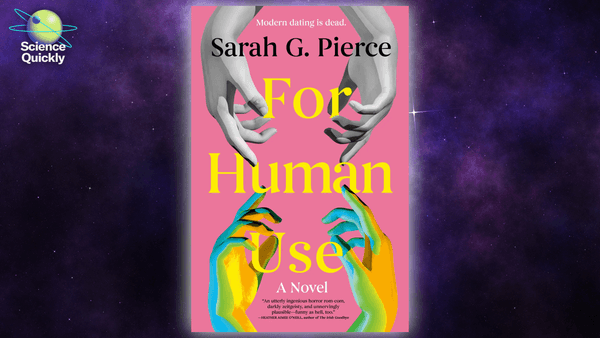
That golden era of the dating app and all the downsides that came with it helped inspire today’s guest, Sarah Pierce. Her debut novel For Human Use imagines a future where efforts to optimize human connection reach an absurd and macabre conclusion: an app that matches users to dead bodies. It’s a darkly funny tech thriller that makes some fascinating observations about the mismatch between our desire for companionship and what supposedly social apps actually sell us instead.
On supporting science journalism
If you're enjoying this article, consider supporting our award-winning journalism by subscribing. By purchasing a subscription you are helping to ensure the future of impactful stories about the discoveries and ideas shaping our world today.
Sarah recently sat down to chat with SciAm’s books and culture lead Bri Kane. Here’s their conversation.
Kane: I’m so excited to talk to you about your book For Human Use. There’s a really wild core concept in this book, so I wanted to ask for your top-line summary and how you came up with this core concept.
Pierce: All this time, I’m still really bad at the top-line summary. And it’s changed a little, but it’s basically, it’s about a tech founder who convinces the world to use a dating app, except when you swipe right, the person’s dead body shows up, and you live with it. And it’s about that tech founder and the finance guy who’s kinda trying to stop him.
Kane: Yeah, and so this book, I really liked how it spun out from this core concept because you see that on the cover, “Oh, you’re dating a dead body. What does that even mean?” And it turns into this really wild, twisty thriller. So I wanted to ask you: What trends on dating apps do you see that inspired your interest in these larger cultural fads and how they spin out to not just a trend on a dating app anymore?
Pierce: It’s funny, when the book first came out, [it] was like, you know, you were dating in “the golden age of dating apps,” which is just such a funny phrase because it certainly didn’t feel that way. But, you know, there was a period in New York, let’s call it 2015 to 2017, where dating apps were huge. People were using them in the way they were intended to be used.
And so, at that same time, there was a finance trend going on in New York, which is like, all these tech guys were getting pretty far in finance with, sort of, these bullshit California tech ideas. They were just getting really far in New York culture. And for New York, which has generally and historically been dominated by finance, there was a big period where it felt like tech was really big in New York. And it was like, “Is this the sunset of the Wall Street archetype in New York, and we’re gonna be ruled on both coasts by the Californian tech founder?”
And so I was really drawn into that idea of these two archetypal men: Silicon Valley tech founder, Wall Street guy. And, you know, “Who do you hate more?” is sort of one question of the book.
Kane: Yeah, I mean, it seemed like a very, you know, pretty pointed critique of how these apps, these, like, start-up culture apps, are often financed before they’re truly understood. And in the book, we really see the ramifications of that lack of understanding that still has billions of dollars on the line.
Pierce: Yeah, ’cause, like, meeting people was something that was extremely hard to commodify. You know, you could commodify it indirectly, I suppose, in clubs and in entertainment culture is a thing. But I thought it was really funny that the, sort of, meat market of human dating was so commodified with, you know, Bumble and Tinder and Hinge and The League. It was like they all happened at once in this explosion. And it’s funny, looking back on it, for as much as I didn’t enjoy it while it was happening, I didn’t appreciate that, like, people were using the apps as they were intended to be used. So when you swiped right on someone, and you both connected, yes, there was always someone who didn’t message you or, like, just wanted to message and not meet up. That’s always been there. But it seems, talking to people who are still active on these apps, that seems to have become the dominant thing, is that people now will swipe, and then there’s no conversation. They’re having trouble making that last step into meeting in real life, which is funny, ’cause it’s like, “Then what are you doing? Do you log on to this app just to talk to random people?” And the answer is, like, for a lot of people, it seems to be that’s what they’re using it for.
Kane: Yeah, and so this book also tackles teens using this app, which I thought was a really interesting twist. It’s one thing to think about teens using Instagram or even dating apps and how the lines of appropriate behavior there need to be investigated, they need to be understood. I don’t wanna spoil too much about your book in this interview, but all this discussion about teen safety online, what you’ve been thinking about it, marinating in these thoughts, given your work, and what inspired you to involve teens in this story of this dating app with the dead that you created?
Pierce: Everything cool has to have some large connection to youth culture. That’s sort of the nature of what cool is. The book is really more about everybody’s reaction to this app being used and observation. And so it’s funny, a lot of the younger readers will pick up the book, and they’re like, “I wanted to read about dating a dead body.” And it’s like, “I know you did,” like, “I wrote this book about you.” And older readers, you know, I’ve tried with different people to sort of pinpoint the age of the reader that’s really perfect for this book, and the best thing I can come up with age-wise: If you were old enough to watch the news on September 11th, I have a more than decent chance of entertaining you with this book. If you were not old enough to watch the news on September 11th, I think some of it is just, the humor isn’t gonna land with the person in the same way, if that makes sense. And I think that’s a roundabout way of saying: If you have sort of two feet in your adolescence having grown up without all this stuff, you have a different experience watching Gen Z interact with these trends than if you’re on the borderline or if you are Gen Z.
Kane: Yeah, I mean, there’s a real generational divide in our understanding of dating apps and their purpose, and the years that you’re on it, as you’re saying, have really changed what your experience on those apps is—which also makes me think about the changing understandings that we’ve had around death and our relationship with death and our cultural institutions’ relationship with death. So I wanted to ask you about some of your inspiration behind these cultural traditional relationships with death and what you found so interesting about, kind of, poking at them and bringing them to the modern world and how disturbing that can be.
Pierce: Yeah. You know, it’s funny, the book is about dead bodies, but I wouldn’t necessarily think that it’s about death but death as this sort of last sacred, intense thing. You know, we have so many things that have become less sacred in our culture—premarital sex, like, people living much of their lives unmarried, or they spend a good chunk of their lives in these dating periods. A person is likely to date for 10 or 12 years, which is just so different than past generations. But when you have these—around death, there is a sort of forced reverence, which I was drawn to.
Just also completely unrelated, but as a, you know, practical matter, the idea came to me in a dream. You know, I met my husband on a dating app. When he was just my boyfriend, we moved in together. And, you know, very early on after moving in, I had a dream, and I’m a big lucid dreamer. I woke up from our bed, and I went to our front door of the apartment that we had just moved into. I opened it, and there was a dead body there. And my first thought was like, “I don’t need this because I have a boyfriend.” And so in the way that dreams sort of bring things together that are not connected, I think at that period where I was truly, I was falling in love with my husband, and I knew that I was never gonna be dating again, there was some part of my brain decided to deliver that in the form of a, a corpse that got dropped at the doorstep. And at the same time, I was taking a creative writing class, and the rest is history.
Kane: Yeah, I don’t want to psychoanalyze your dreams too much on the podcast, Sarah, but that is fascinating to me because the book really does seem to be dealing with the much larger question about human connection and that we are all driven to connect in some capacity. But “our modern world and modern dating apps have made it harder to have a genuine connection with people, to the point that, to find something that feels genuine, people are willing to connect with a corpse” seems to be what I took away as a message from the text. So I wanted to ask you how you connect with the dead. Do you have some sort of death doula practice that inspired any of this, or are you freaked out by dead bodies as much as I am?
Pierce: I am just as freaked out. And you know, it’s funny, on day one of the book, people should know, the protagonist of the book thinks this is crazy.
Kane: It helped me get through the book as well. [Laughs.]
Pierce: He’s like, “What is going on?” And I think that feeling I’m very familiar with. I think the strangest part about getting older—I’m 39 now—is, you know, the things that have happened in the last five or 10 years, it’s just, if you had told me in high school, like, “This will be happening,” I would’ve been like, “You’re crazy.” And I think that a lot of people are experiencing that on a political level, on a cultural level, that we’ve really lost a lot. We all seek a frictionless existence, when it’s like: What is the benefit of that? And I think in love, it’s, there’s a huge drawback to it. The book goes after a lot of online affirmation culture about how it’s, like, always the other person—all this therapyspeak that’s everywhere, and we’ve sort of just forgotten, like, the first rule of human interaction: to just be there with another person and talk and have back-and-forth. And we’ve added just too much information to these, what should be, sort of, natural interactions. And I think a lot of people feel sort of paralyzed, and there’s something attractive about this, sort of, organic but inanimate stand-in.
Kane: Yeah, I think that’s an interesting twist on the book overall. It’s a book that’s interested in the psychology of “Who would interact with this, and how would they interact with it? Why are they drawn to it, why are they repulsed by it, and what do those feelings cause them to do?”
So to close this out today, I have to ask you, “Do you have any advice to us still on the apps? Should we just not settle for the dead ones?” or anything else that you can give me. [Laughs.]
Pierce: I mean, I tell everyone, like, keep going. Dating sucks. It does. And I think it’s really tough that there are so many people out there with this expectation that it should improve or be something meaningful, when in reality, that’s a feature, not a bug. It’s meant to suck because that makes it all the more obvious when you find the right person. And so I think people getting out there and just accepting that’s the nature of it. It’s supposed to be hard; it’s supposed to be demoralizing. There’s all these terrible experiences that you have, some of them really serious, and it’s so tempting to not wanna have them. But there’s a pretty big drawback to not having it, and that’s when you make yourself safe from those terrible experiences, you also cut off everything good, too.
Kane: Exactly. Maybe you get a great listener in a dead body but not a great conversationalist.
Pierce: Correct.
Kane: Well, awesome. Thank you so much for talking with me today. I loved For Human Use, Sarah. I cannot stop recommending it to people. I think it’s a really fun and twisty horror book for this year, so thank you so much for talking with me about it.
Pierce: Thanks so much for having me.
Feltman: That’s all for today’s episode. We’ll be off on Monday for Labor Day, but we’re back next Wednesday with another story about our universal need for companionship—no corpses in this one, though. I promise. We’re talking to a scientist who’s trying to figure out whether humans really have to choose between having lots of friends or having good friends.
Science Quickly is produced by me, Rachel Feltman, along with Fonda Mwangi, Allison Rodgers and Jeff DelViscio. This episode was edited by Alex Sugiura. Marielle Issa and Aaron Shattuck fact-check our show. Our theme music was composed by Dominic Smith. Subscribe to Scientific American for more up-to-date and in-depth science news.
For Scientific American, this is Rachel Feltman. Have a great weekend!
