
In April, as the intrepid crew of Artemis II shot around the moon, NASA astronaut Christina Koch snapped a photograph of the distant Earth setting behind the lunar surface. It was an image with a 60-year-old legacy—one that often has been eclipsed by another famous photograph.
Koch’s picture drew instant comparison to the latter iconic image, “Earthrise,” a photograph shot by NASA astronaut Bill Anders during the Apollo 8 mission in December 1968. Like Artemis II, the Apollo 8 spaceflight looped around the moon—a crucial step on the road to NASA’s 1969 moon landing. But in truth, Koch’s image had an even earlier inspiration.
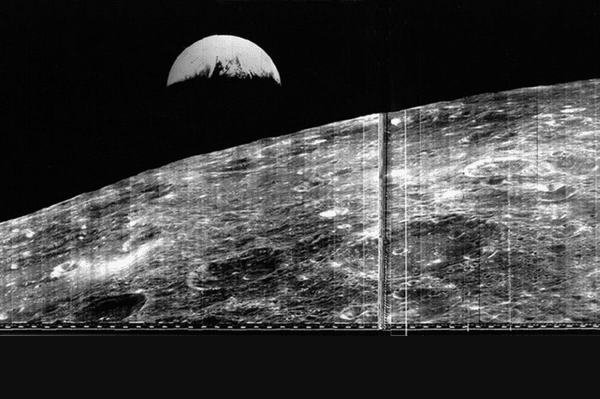
August 23 marks the anniversary of the first time Earth was photographed from the vicinity of the moon. The picture was taken on that date in 1966 by NASA’s Lunar Orbiter 1, the first U.S. spacecraft to ever orbit the moon.
On supporting science journalism
If you're enjoying this article, consider supporting our award-winning journalism by subscribing. By purchasing a subscription you are helping to ensure the future of impactful stories about the discoveries and ideas shaping our world today.

A view of the moon and a crescent Earth from Lunar Orbiter 1.
NASA
Launched on August 10, Lunar Orbiter 1 was tasked with taking close-up pictures of the moon, in particular, nine possible landing sites for the upcoming Apollo missions. Over several days, it took hundreds of pictures covering more than five million square kilometers (two million square miles) of the lunar surface. Among those photos was a grainy black-and-white shot: in the foreground, it showed the rough terrain of the moon, pockmarked by craters, while in the background, it captured a semicircle of Earth, stark white against the inky black backdrop of space.
Without Lunar Orbiter 1, Anders might never have taken his iconic "Earthrise," seen below. Anders shot the picture on Christmas Eve in 1968.

Apollo 8’s “Earthrise” image, captured in 1968.
NASA
Lunar Orbiter 1 was initially supposed to orbit the moon for a year, but that was not to be. After just months into its mission, NASA engineers determined the spacecraft’s condition had deteriorated beyond repair. In order to prevent any possible interference with the then upcoming Lunar Orbiter 2, NASA commanded it to crash into the farside of the moon during the vessel’s 577th orbit on October 29.
Still, looking at “Earthrise” and Koch’s “Earthset,” it is clear that Lunar Orbiter 1’s legacy lives on. While the missions get more elaborate, the sense of wonder at seeing our planet in space from our natural satellite hasn’t changed, despite the passing of 60 years.
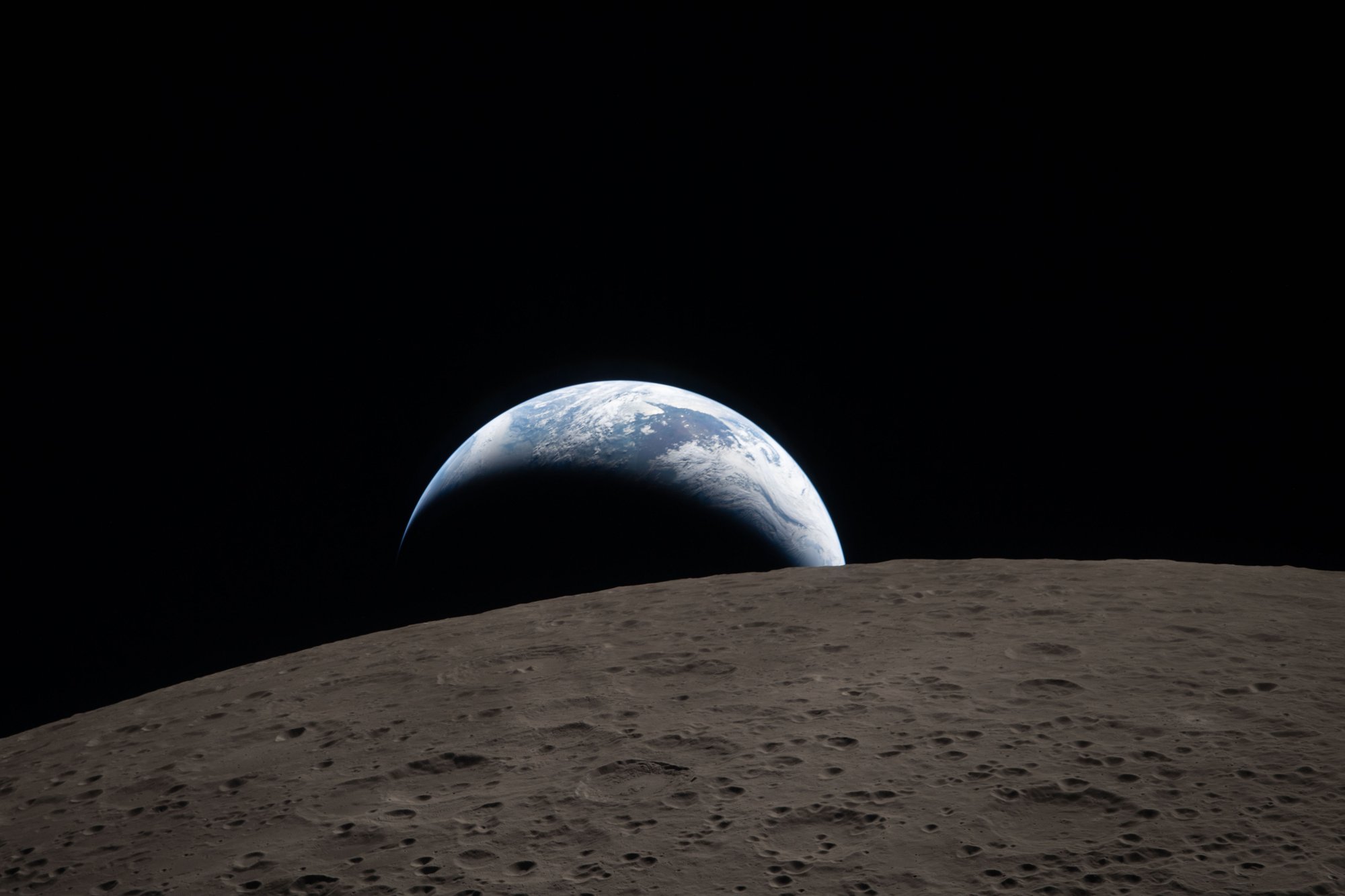
Artemis II’s “Earthset” image.
NASA