
Editor’s Note (8/24/26): China has delayed the launch of its robotic Chang’e 7 mission to the lunar south pole until 2027, according to a statement posted yesterday, August 23. The delay likely reflects inclement weather from Typhoon Narra near the Chang’e 7 launch site.
China is about to launch one of its most ambitious missions yet—and it might scoop a major prize in the process. Called Chang’e 7, the mission aims to be the first ever to touch down directly at the moon’s south pole, where it will search the region’s dark, foreboding craters for water ice. Whatever it finds there could radically reshape a race between China and U.S. to build bases on the moon.
“It’s an amazing mission,” says Norbert Schorghofer, a Hawaii-based senior scientist at the Planetary Science Institute. “There has never been a landed mission to find water [on the moon].” If China succeeds with the mission, it “will be the leader in lunar science,” Schorghofer adds. Leaving aside the U.S.’s crewed Apollo landings more than a half-century ago, “they will have surpassed everyone, including the United States, in lunar exploration in the short term.”
Chang’e 7, China’s seventh moon mission, is scheduled to launch on a Long March 5 rocket from the coastal Wenchang Space Launch Site on the island of Hainan, with the launch window opening on the morning of August 24 local time (the evening of August 23 EDT). The mission includes an orbiter, as well as a lander, which totes a rover and a novel “hopping” robot. The spacecraft will take up to six days to reach lunar orbit, where it will then spend two months preparing for a November landing meant to be a near bull’s-eye on the lunar south pole. The mission also includes equipment from several international partners, highlighting China’s growing global influence—both on and off Earth.
On supporting science journalism
If you're enjoying this article, consider supporting our award-winning journalism by subscribing. By purchasing a subscription you are helping to ensure the future of impactful stories about the discoveries and ideas shaping our world today.
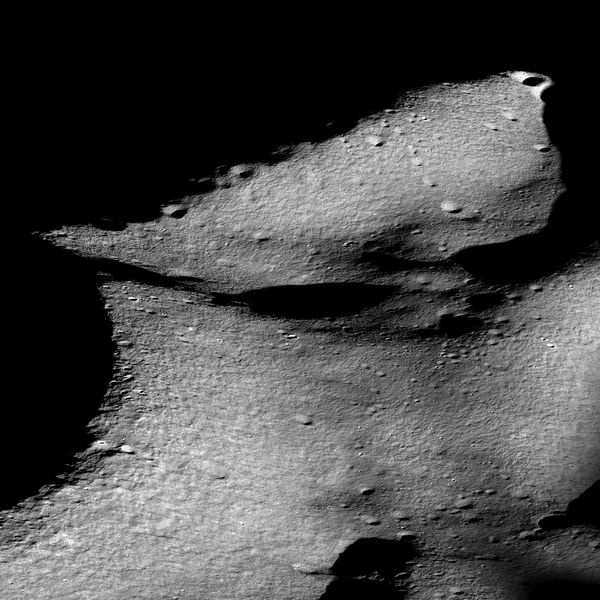
The mission’s lunar target is Shackleton Crater, a 21-kilometer-wide (13-mile-wide) pit with a rim that grazes the moon’s south pole. No other spacecraft has ever landed so close. That proximity should allow Chang’e 7 to prospect for water ice trapped in smaller depressions near Shackleton that, because of the moon’s tilt, never see sunlight and have temperatures just a few dozen degrees above absolute zero. “There are big reservoirs of ice water at the poles,” says Simone Dell’Agnello, a physicist at Italy’s National Institute for Nuclear Physics.
No one knows, however, just how big those reservoirs are or what their actual distribution is across the lunar south pole’s crater-pocked desolation. And because that ice might be used as for manufacturing rocket fuel or to make potable water for thirsty astronauts, answering those questions is key for the U.S.’s and China’s competing plans to construct crewed lunar outposts. As part of its Artemis program, NASA’s Moon Base would be sited near the south pole; so, too, would China’s International Lunar Research Station, for which Russia is a major partner. (A lunar partnership between the U.S. and China seems out of reach for now for several reasons, including U.S. congressional legislation that mostly forbids NASA from collaborating with China.)
“There is intensifying competition between both sides,” says Rajeswari Pillai Rajagopalan, an expert in space geopolitics at the Australian Strategic Policy Institute. Chang’e 7 could “get a lot of the data that both these nations are looking for in terms of finding water.”
After landing at a flat and sunlit location that the China National Space Administration will determine once Chang’e 7 is in orbit, the mission will deploy its rover and hopper onto the surface. The rover will take images, use a radar to scan the subsurface and examine the soil for signs of ice. Meanwhile the hopper will fire a rocket thruster to jump up to 15 kilometers (nine miles) across the surface at a time, targeting touchdowns in surrounding, permanently shadowed craters. It would be only the second vehicle, after NASA’s Ingenuity helicopter on Mars, to perform multiple flights on another world.
The six-legged hopper, which, at each landing site, will crawl to material undisturbed by its rocket plume, also carries a drill to look for water ice. No other spacecraft has ever descended into the moon’s shadowy south polar craters, although NASA did crash a rocket into one in 2009 and watched a resultant plume of water vapor burst out. A mission in 2025 led by the U.S. company Intuitive Machines also attempted to deploy a hopper, called Micro Nova, on the surface. But the lander fell on its side during touchdown, and the hopper was lost. NASA also plans to send its crater-prospecting Volatiles Investigating Polar Exploration Rover (VIPER) to the lunar south pole sometime next year. That mission is meant to get there, however, via an as-yet-unproven lander and a now grounded rocket, both made and operated by the U.S. company Blue Origin.
If China does find ice, there are interesting territorial ramifications. Under the United Nations Outer Space Treaty of 1967, no country can lay claim to land or resources on another world, says Michelle Hanlon, a space lawyer at the University of Mississippi. Article IX of the treaty, however, does require other nations to act with “due regard” to others. “The United States therefore could not land so close that its descent plume, dust or operations placed China’s lander, rover, hopper or scientific measurements at risk,” Hanlon says. NASA recommends that spacecraft land at least two kilometers away from others.
Besides obvious uncertainties about amounts and locations, it’s also unclear what form ice on the moon will take. It could be present as sheets that are more straightforward to mine, Schorghofer says, but is more likely mixed into the soil at a concentration of up to 10 percent. “That’s, I think, the most theoretically likely scenario,” he says. The water could then be extracted by heating the soil through various methods.
Studying the ice in situ and taking carefully selected samples could also reveal how it was delivered to the moon in the first place—perhaps as particles via solar wind or from impacts. And given the lunar ice’s likely extreme age, Dell’Agnello says, tracing its history would offer hints about the origins of Earth’s water as well.
Chang’e 7 is not just a mission to hunt for ice. It includes an assortment of instruments provided by partner countries, showcasing China’s eagerness for international collaboration. The orbiter will carry a particle detector that will be Thailand’s first piece of space hardware to leave Earth orbit and will measure incoming particles from around the solar system. “It’s a big moment,” says Wiphu Rujopakarn, executive director of the National Astronomical Research Institute of Thailand.
The mission also carries instruments from Egypt, Switzerland, Bahrain and Italy; the latter country’s instrument is a small laser retroreflector on the lander that can be used to precisely measure distances from orbiters to the lunar surface. And despite U.S. prohibitions on federal-level collaborations with China’s space program, the Chang’e 7 lander does carry one American component: a 1.5-kilogram telescope. Built by the University of Hong Kong (HKU) and the International Lunar Observatory Association in Hawaii, the telescope will take panoramic snapshots of the Milky Way rising above the southern rim of Shackleton Crater. “It’s a bit like the iconic ‘Earthrise’—we’re hoping to see a ‘galactic plane rise,’” says Quentin Parker of HKU’s Laboratory for Space Research.
The follow-up Chang’e 8 mission, also bound for the lunar south pole in 2028, similarly includes a variety of international partners. That same year, NASA officials say, the space agency’s Artemis IV mission should be landing astronauts on the moon—although this timeline remains optimistic. China, meanwhile, is aiming for its first human landing in 2030. So far it has repeatedly stuck to its timelines for lunar exploration. Chang’e 7 could be its most fateful moon milestone yet as the quest for lunar ice heats up.