
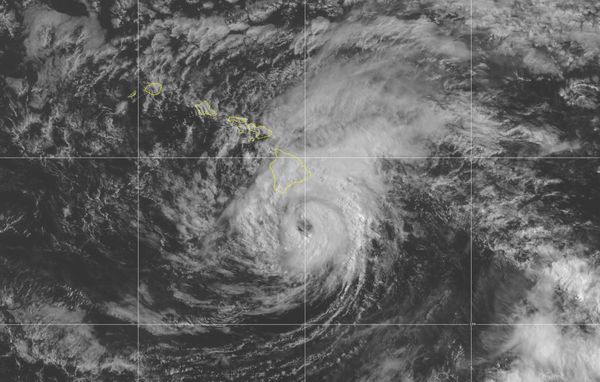

Hawaii is reeling from a near-direct hit from Hurricane Lala. The storm passed just south of Hawaii’s Big Island as a Category 1 hurricane on Saturday, bringing wind gusts of around 75 miles per hour (about 120 kilometers per hour), heavy rains and flooding, according to the National Hurricane Center (NHC).
At least one person has died because of the storm, while nearly 200 flights have been postponed and tens of thousands have been without power, said Hawaii’s governor Josh Green in a video statement on Saturday evening.
As of Monday, the cyclone has weakened into a tropical storm and is now located southwest of the islands. While the state may continue to see some rain and possible “localized areas of flooding and mudslides,” the NHC said, the worst of the storm has passed.
On supporting science journalism
If you're enjoying this article, consider supporting our award-winning journalism by subscribing. By purchasing a subscription you are helping to ensure the future of impactful stories about the discoveries and ideas shaping our world today.
“We’re in the recovery phase now,” says Sheana Walsh, a meteorologist at the National Weather Service’s Honolulu office.
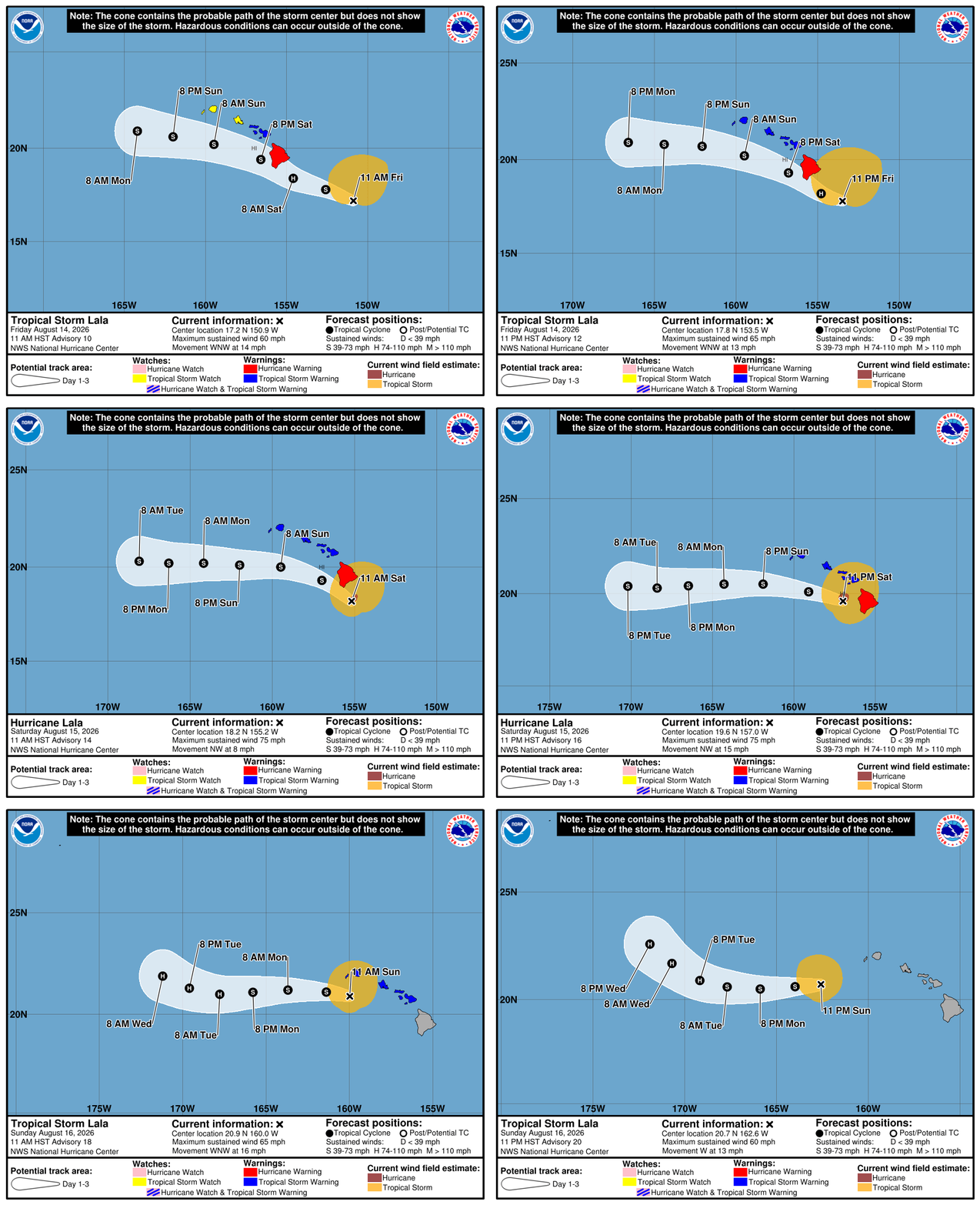
A historical forecast cone shows the then probable path of Lala’s storm center between August 14 and August 16.
Hawaii is no stranger to hurricanes, but the storms rarely make landfall.
The reason is partly that Hawaii is a small archipelago in the vast Pacific Ocean, so the chances of a storm making a direct hit are relatively low. Also protecting the islands are relatively cooler waters and strong, consistent trade winds, which typically help deter hurricanes, explains Matthew Rosencrans, lead hurricane season forecaster at the National Weather Service. As Scientific American previously reported, no hurricane has directly hit the state since Hurricane Iniki in 1992.
During El Niño years—and this year is shaping up to be a particularly strong one—conditions in the Pacific change. An El Niño is defined by abnormally warm ocean temperatures in the eastern Pacific, which can fuel hurricanes, explains Phil Klotzbach, a senior research scientist at the department of atmospheric science at Colorado State University.
In the parts of the ocean where Lala formed and grew, ocean temperatures were warmer than normal, which may have given the hurricane “more juice,” Klotzbach says.
El Niño also typically means less vertical wind shear, or less change in wind speed or direction with height, in the atmosphere in the eastern Pacific. The less wind shear there is, the more favorable the conditions for hurricanes become.
Taken together, these factors mean it is more likely hurricanes will form near Hawaii, an otherwise low-risk region. In fact, in an El Niño year, it’s not uncommon for multiple cyclones to threaten the islands.
“That’s just kind of the El Niño calling card,” Klotzbach says.
On the other side of the Americas, in the Atlantic Ocean, it’s another story. Wind shear tends to increase during El Niño, and the Atlantic hurricane season tends to be less active.
While hurricanes in the Atlantic are still possible, it’s likely the area will be “pretty quiet,” Klotzbach says. Earlier this month the National Ocean and Atmospheric Administration predicted a “below-normal” hurricane season in the Atlantic, with between seven and 13 named storms expected and two or fewer major hurricanes.
“The winds at about 40,000 feet tend to become much stronger over the Atlantic during El Niños. Those winds will just tear the top off storms [and] clusters of storms,” Rosencrans says. “They’ll get ripped apart.”
For residents of Hawaii, Rosencrans recommends being prepared in case of more hurricanes, such as by stabilizing one’s home and gathering water and food. NOAA officials also recommend having batteries on hand in case of power outages and placing any generators outside, away from doors and windows, to avoid carbon monoxide poisoning.
Rosencrans suspects islanders will need to be ready. “Unfortunately, I know they just had a lot of damage and flooding from Lala, but it looks like it’s still going to be an active period for the central and eastern Pacific,” he says.