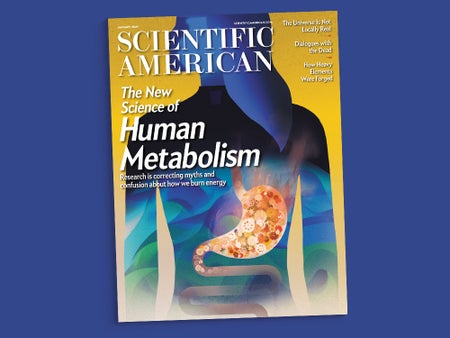
PolicyJanuary 1, 2023
How Metabolism, Heavy Elements and Quantum Entanglement Really Work
Gravitational waves, the evolution of human metabolism, theodiversity and quantum entanglement in this month’s issue of Scientific American
Laura Helmuth was formerly editor in chief of Scientific American. She previously worked as an editor for the Washington Post, National Geographic, Slate, Smithsonian and Science. She is a former president of the National Association of Science Writers. She is currently a member of the National Academies of Sciences, Engineering, and Medicine's standing committee on advancing science communication and an advisory board member for SciLine and The Transmitter. She has a Ph.D. in cognitive neuroscience from the University of California, Berkeley. She recently won a Friend of Darwin Award from the National Center for Science Education. Follow her on Bluesky @laurahelmuth.bsky.social
How Metabolism, Heavy Elements and Quantum Entanglement Really Work
Gravitational waves, the evolution of human metabolism, theodiversity and quantum entanglement in this month’s issue of Scientific American
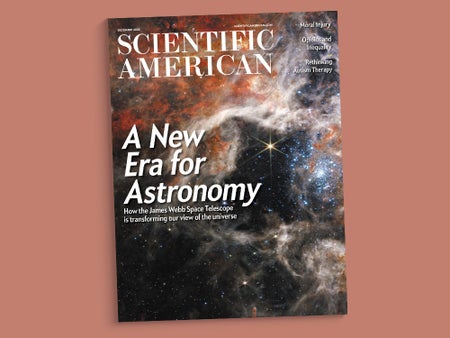
The Stunning First Results from JWST
A new view of the universe, moral injury, opioid addiction and inequality, and more in the December issue of Scientific American
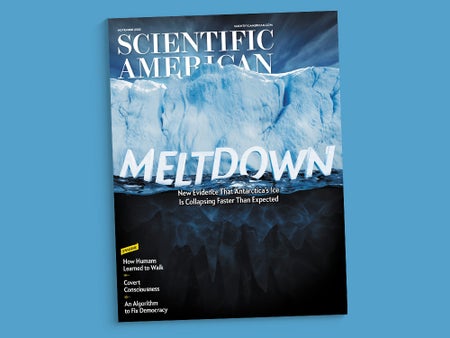
Fun Details about the Human Side of Science
The Thwaites Ice Shelf is cracking up, humans learned to walk many times, and covert consciousness can be detected in unresponsive patients
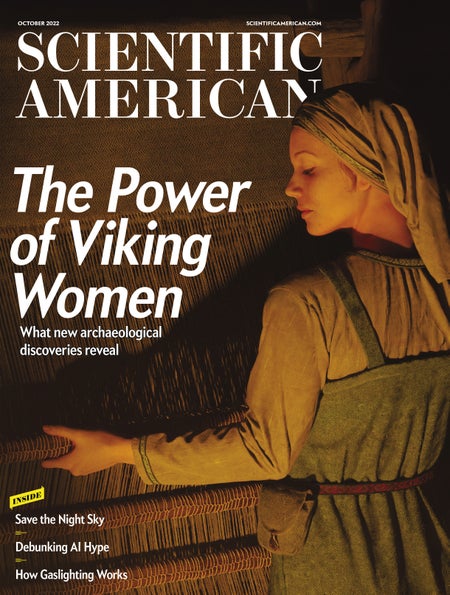
It’s Time to Fight Light Pollution
Learn about Viking women, doughnuts in the brain, nuclear weapons, and more in the October issue of Scientific American
New Solutions to Black Holes, Snake Phobia and Forecasting Atmospheric Rivers
These fun stories show progress from the scale of quantum effects to that of snakes and from Earth to the edge of the universe
Mystery, Discovery and Surprise in the Oceans
Bizarre sea creatures, a new view of the ocean, the race to the moon, and more
Students Deserve to Learn about the Climate Emergency
Voyager spacecraft, generational trauma, momentum computing, and more in this issue
Mammals’ Perseverance, Fast Radio Bursts and Health Justice
Research shows straightforward solutions to help children learn and thrive
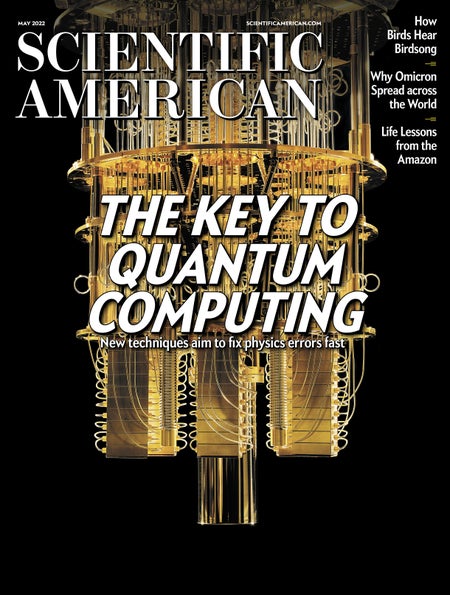
Birdsong, Quantum Computing, Omicron’s Mutations, and More
How science helps us see, hear and fix things we can’t easily perceive
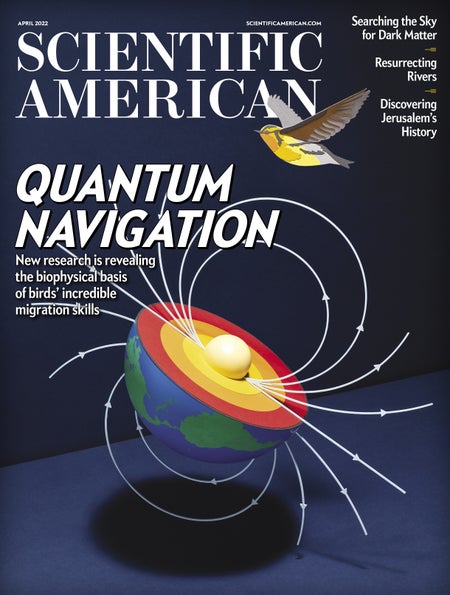
Bird Navigation, Dark Matter, Biblical Archaeology, and More
Highlights from the April 2022 issue of Scientific American
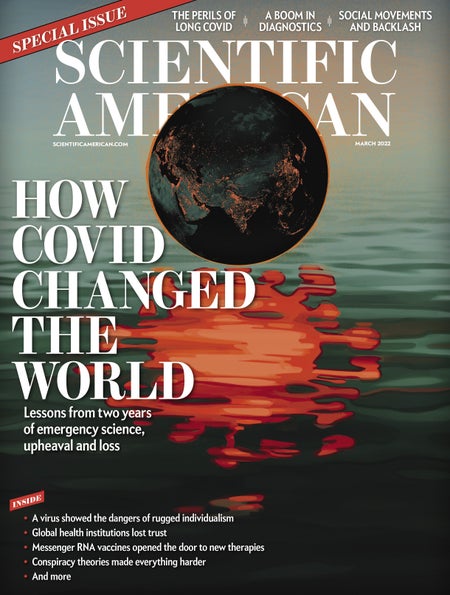
Introducing a Special Issue on How COVID Changed the World
Please share your observations about how the pandemic changed life for you and yours
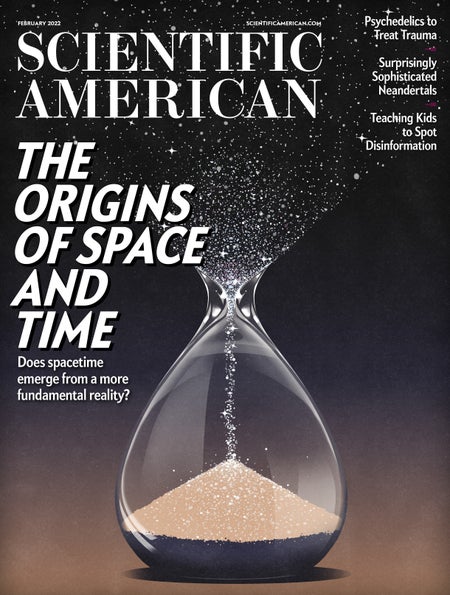
Big Questions about Space, Time, Neandertals, Psychedelics and Reality
Why salamanders are so strange, why people jump to conclusions, and more in our February 2022 issue
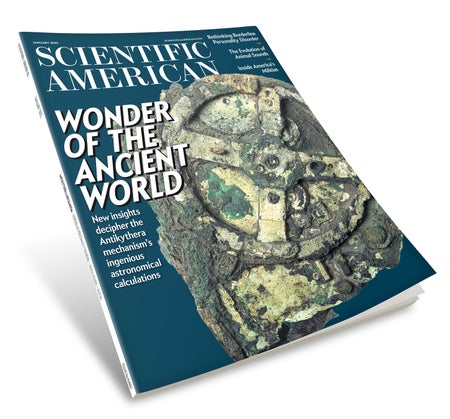
New Insights into Ancient Greece’s Planetary Motion Machine
Quantum timing, the evolution of animal sounds, militias, and more in the January 2022 issue
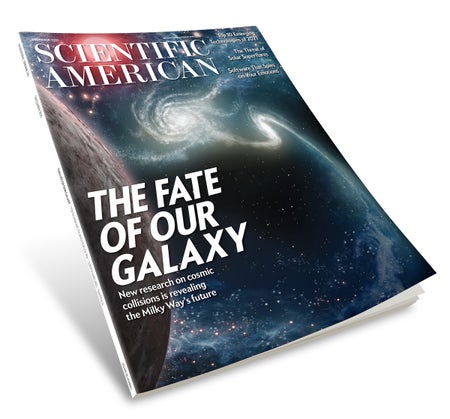
The Milky Way Is Destined to Collide with Andromeda, and We Know What It Will Look Like
Solar superflares, emotion-detecting artificial intelligence, emerging technologies, and more in our December issue
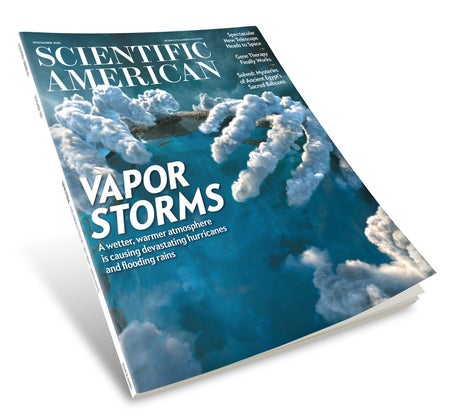
Ancient Egypt’s Sacred Baboons, Vapor Storms and Fighting Hunger
Why Thoth is our favorite deity, preparing the James Webb Space Telescope and fixing genes in this month’s issue
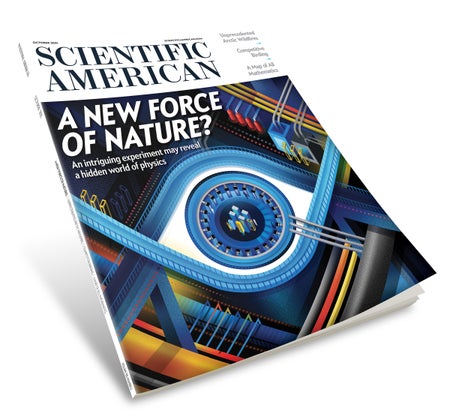
A Big Day Birding and a Possible Fifth Force of Nature
Reduction of food waste, infinite math and quantum physics experiments designed by AI in our October issue
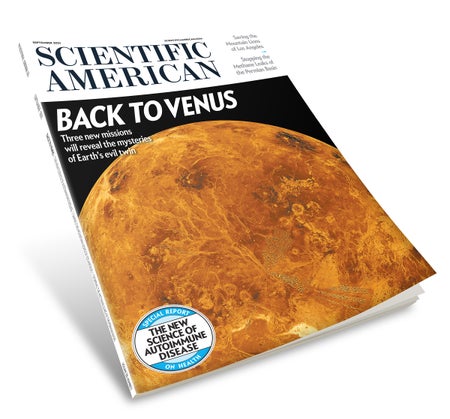
Progress on Autoimmune Disorders, Mountain Lions and Venus
Training science writers for a future of solutions
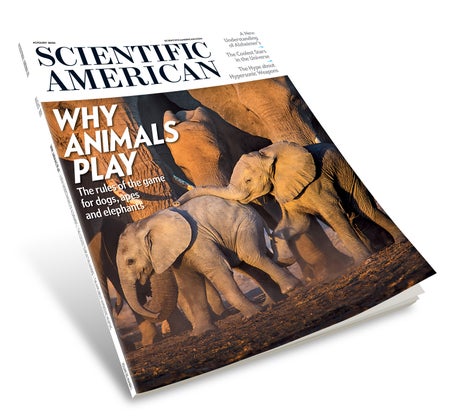
Animal Play Is Delightfully Meaningful
Brown dwarfs, stuttering, quantum chemistry, and more
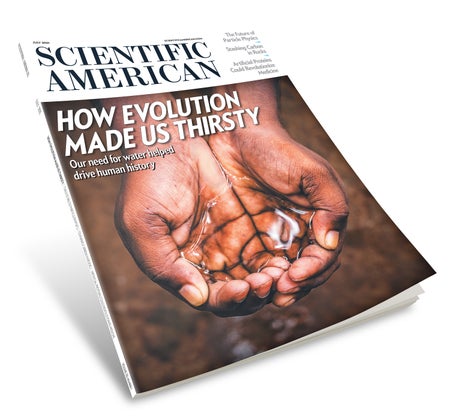
Why Humans Are So Thirsty
Artificial proteins, carbon-sucking rocks, particle accelerators, and more
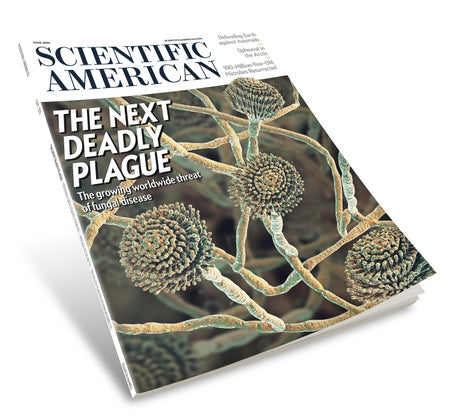
Do People Who Enjoy Science Have a High Tolerance for Disturbing Ideas?
Killer fungi, killer asteroids, buzzy cicadas, brain sensations, and more unsettling discoveries
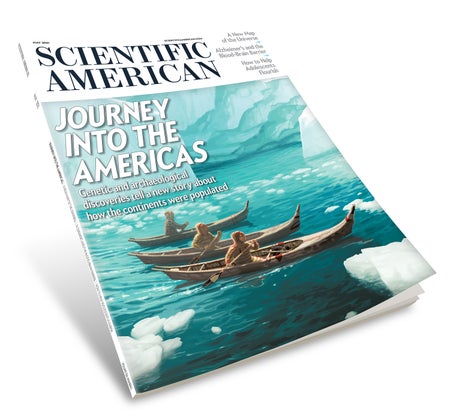
Dolphin Spins, Adolescent Brains and a Very Big Map
Sharing “an acute appreciation for science”
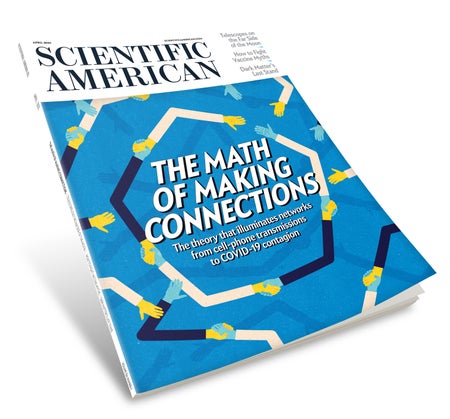
How to Be an Effective Science Communicator
Telescopes on the moon, the mathematics of connections, new hope for dark matter, and realistic mythical beings

Social Justice Movements, Exomoons and a Century of Bird Banding
What we’re learning about how solar systems and civilizations developed
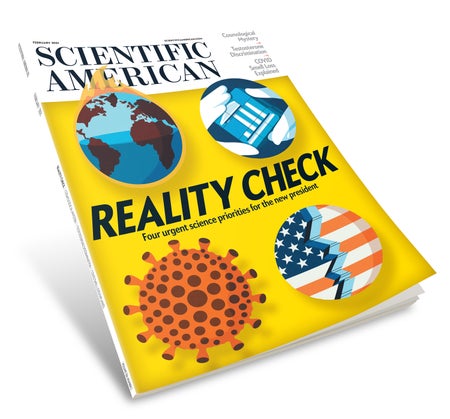
Cosmic Mysteries, Zombie Battles and Science for the Future
Scientists are figuring out the loss of smell in COVID—but not the energy of the not so empty cosmos